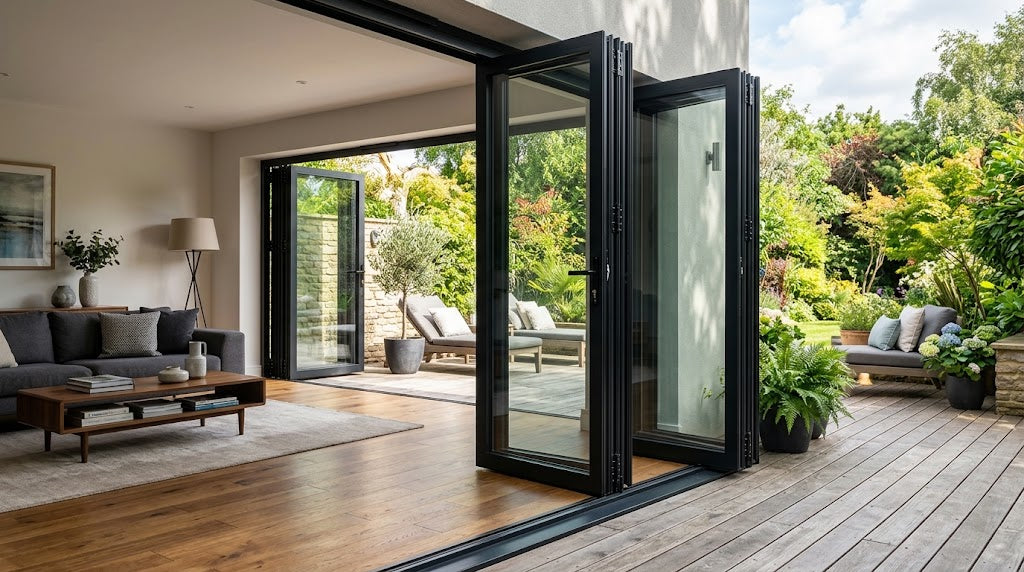
An aluminum bifold door that gets stuck midway across an opening needs a distinct type of check compared to a bifold door not closing completely or refusing to lock. Both situations can make the handle feel tight. The real difference shows up based on where the stiffness starts. You also need to see if the issue happens at the exact same panel joint. Furthermore, notice what shifts as the panels fold. These specific details are much more helpful than just trying to tweak a bifold door roller right away.
Many bifold door problems start when one misaligned part impacts the panels next to it. A dropped leaf can rub against a sill. This drop can also move a flush bolt away from its proper hole. Dirt in the bifold door track causes a completely different issue. This is especially true when the running wheels hit the exact same dirt over and over. Figuring out this pattern helps you decide the right step. It tells you if you need basic cleaning, panel alignment work, or new parts.
The Position of the Obstruction Is the First Clue
Stiffness along the entire opening
Hard movement along the whole path suggests an issue shared across the entire track. A dirty bottom track, a wheel with bad rubber, or a bent guide rail can fight movement across multiple panels. The difference between top-hung and bottom-rolling setups is very important here. A top-hung bifold door moves its main weight through the head carriers. Meanwhile, a bottom-rolling design pushes more of that weight down into the bottom wheels. The actual hardware layout tells a worker exactly where to look, rather than just the outward look of the track.
A scrape at one corner or fold
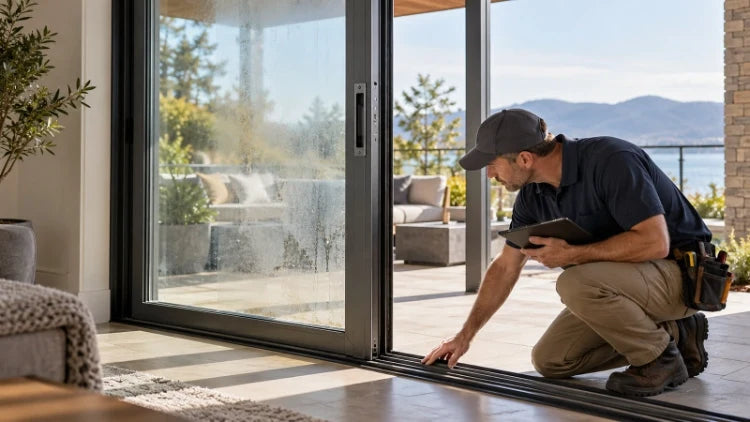
A scratch on the threshold gives you a solid starting point. If a section touches the ground at the exact same corner, check its panel clearance compared to the nearby leaves. Do not just look at how clean the track is. A shift in the gap space above that same panel hints at twisting or sinking. On the other hand, a shiny rubbed spot near a hinge side suggests rubbing between the folding leaves. A sticking out screw or a damaged track edge can cause similar signs, even if the panel has not dropped at all.
Smooth travel until the final latch position
A front panel might reach the closing frame but stay slightly crooked. The handle then feels stiff, even though the rollers have finished moving. The most common trouble spots are the side seal, multipoint lock points, and any flush bolt holes. You can try lifting the panel slightly. If lifting it makes the lock work, a shape issue is much more likely than just normal wear inside the handle itself. Changing the lock before fixing the panel alignment can easily hide the real root cause.
Clean the Track, Then Observe What Remains
Loose house dust and outside dirt gather in the slots of aluminum thresholds. Pet hair and bits of leaves might also build up along the sliding path. You should vacuum the open channels. Then, wipe the sliding surface with a soft rag. This removes junk that blocks good wheel contact. Your cleaning sprays and oils must follow the specific hardware manual. Standard oils can trap hard dirt. Therefore, they are bad for certain seals and rollers.

How the door acts after cleaning tells you a lot. An aluminum bifold door that slides smoothly again likely just had dirt causing the issue. If a specific scrape stays the same, you must look closely at the track edge, the panel clearance, and any loose threshold trim. Cleaning over and over will never fix a shifted carrier bracket or a crooked frame. Dirt trapped deep under a fixed part needs a proper service check. You should not take the sill apart without expert help.
Raised exterior sills and low interior sills need different care
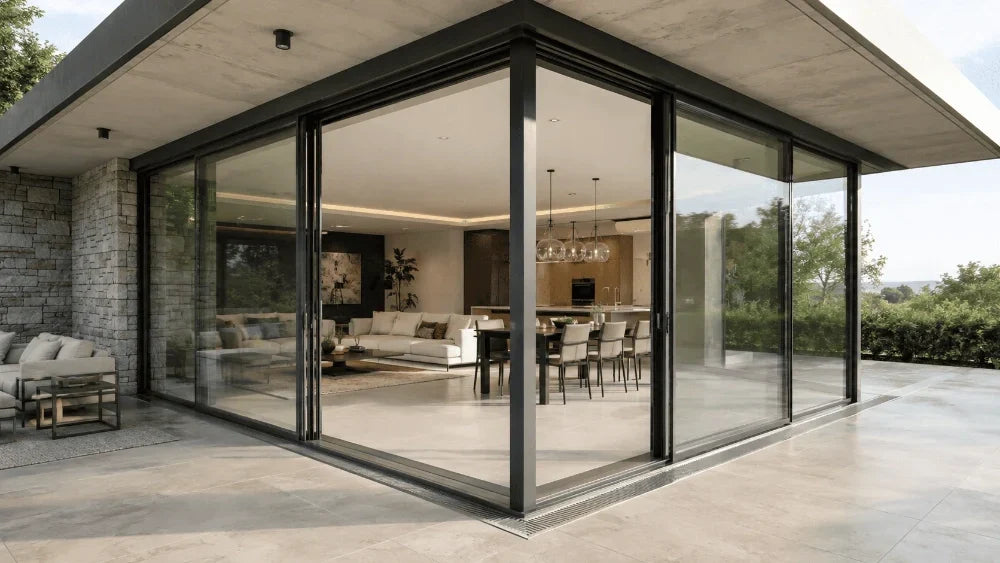
A tall outside threshold handles weather and water differently than a flat inside design. Dirt near the drainage slots after a storm might just point out a spot that needs regular wiping. It does not automatically mean the rollers are broken. A low track also makes the finished-floor level much more important. Adding new tiles or rugs can easily wipe out the needed space under the door. The drainage slots must stay clear. Also, you should never remove the hardware holding the panels during normal cleaning.
Panel Gaps Distinguish Door Movement From Building Movement
The spaces between the leaves act as a map of the whole setup's shape. On a sunken panel, the bottom space might pinch shut at one side while the top space gets wider at the other side. That single shift can mess up hinge action, the folded stack shape, brush seal rubbing, and the exact height of the locks. This does not mean every single part broke on its own. Fixing the main support shape can often cure multiple side issues all at once.
Changes to the surrounding wall offer different hints. Putting in new floors might push the ground too close to a door that never actually moved. Sinking walls or frame distortion, however, can cause a long, uneven gap across several leaves. You might also see clear shifting at the head track. Because of this, a repair person needs the original setup plans or size guides. They also need to check the health of the surrounding walls and floor.
An aluminum bifold door adjustment means working with connected parts. Moving one carrier up can fix the space for one leaf. However, it might also cause tight rubbing at a nearby hinge or shift the locking stile's exact spot. The correct steps and safe limits come from the specific system guide. You cannot just copy a similar-looking part you saw in a web picture. This rule is highly important for huge glass panels. Their heavy weight must stay safely held up during the entire job.
Rollers, Hinges and Pivots Leave Different Evidence
Running gear and its attachments
A wheel that wore down poorly might cause bumpy sliding at steady spots. A loose bracket can let the door wobble sideways, even if the wheel rubber looks fine. Neither clue proves you only need a new wheel. How the part connects, the straightness of the track, and how the panel weight sits all change how it runs. A skilled worker can spot the right carrier and check if it matches before buying any new running gear.
The effect of hinge and pivot position
Hinges manage how side-by-side leaves sit together. Wear or slack often shows up as a triangle-shaped gap near one fold. Meanwhile, an end pivot controls where the whole folded group sits against the wall. This difference tells you which parts to look at first. Big glass sections must be held up securely before you loosen any hinge, pivot, or carrier part. If you do not support them, a tiny tweak can drop the heavy load suddenly.
When the Door Reaches the Jamb but the Lock Resists
When fully shut, the locking stile must meet the frame perfectly straight. This ensures every hook or bolt slides into its hole. A leaf that dropped a tiny bit can jam a flush bolt hard against its hole edge. A twisted EPDM gasket can push back at that exact same moment. This makes it seem like the multipoint lock is broken. Seeing a squished gasket or uneven squeezing is very useful clues. This is especially true if the handle turns easily before the door hits the side frame.
Grinding a metal catch or bending a locking bar to make it fit ruins the lock shape. This bad fix can easily lower your home security. A worker must check how the door sits before deciding if the lock actually needs fixing. The same rule applies if the handle gets hard to turn right after putting in new weather strips. Too much gasket push can ruin the closing action, even if no lock part is actually damaged.
What Owners Can Check and What Requires Service
Daily checks hold real value. Note the panel count, the opening way, the specific fold that sticks, when the issue started, and any clear wear or water dirt. A homeowner can safely wipe away loose dirt and wash the visible seals without taking the unit apart. The FGIA maintenance guidance gives good basic care rules. However, the exact door maker's guide remains the final word for safe cleaners and steps.
Tweaking a heavy carrier, taking out pivot screws, holding up heavy glass, fixing frame distortion, or changing lock parts goes way past basic cleaning. Those tasks require a person who knows the exact setup well. They must know how to lock the panels in place safely. A finished fix also needs a complete sliding and locking test. This test must check for smooth gasket touch, solid lock catch, and open drainage slots. You cannot just check the one spot that was rubbing before.
Repair or Replace: Applying the Findings to a New System
A messy track, a torn gasket, or one loose screw mostly points to a simple fix, as long as matching parts exist. Buying a whole new door makes sense after many failed panel alignment tries, bad frame distortion, lost original parts, or wanting a new opening style. A new door also lets you pick a sill that fits your local weather better. None of these big choices get easier by just buying a bifold door roller because it looks slightly like the old broken one.
For a brand new folding door plan, Luvindow shows a 90 Series. It uses strong 6063-T5 aluminum shapes. It has about a 2.0 mm (0.08 in) metal thickness, a 90 mm (3.54 in) main frame width, and uses EPDM gasket seals. The tall-track version shows an outside height of roughly 34 mm (1 5/16 in) and an inside height of about 52 mm (2 1/16 in). The low-track style is about 19 mm (3/4 in) tall and is meant for inside rooms. These are fresh options for a new building project. They are not fix-it sizes for an old, unknown door.
Knowing the exact product brand matters a lot when talking about parts. Luvindow's online aluminum folding patio door page lists CMECH hinges and tough load-bearing rollers. However, the 90 Series paper lists American Shimick parts and a Savio handle instead. You should not mix these listed details into one guessed standard kit. A real project price quote must list the exact series, the carrier style, and the specific parts provided.
You can look at the bifold door collection along with a plan drawing. This drawing must show the opening width × height, the leaf count, the folding way, the exact finished-floor level, and the expected rain hit. If you want to replace an old door, take clear photos of the current threshold and any repeated rub marks. This helps explain why the old setup fails now. The Luvindow project inquiry team can then plan a great new setup. They will not just offer a new door as a quick fix for another brand's broken unit.
Conclusion
The exact spot where a bifold door gets stuck shows you the best parts to check first. Dirt in a track, shifting panel gaps, and bad lock line-ups all need totally different fixes. Buying a full replacement makes sense based on the health of the whole wall hole and if good repair parts exist. You should not replace it just because it feels a bit stiff.
FAQs
Q1: Why does an aluminum bifold door scrape the bottom track?
The reason might be hard dirt in the sliding groove. It could be a bent track edge, lost panel clearance, or a shifted support part. You should clean out any easy-to-reach dirt. Then, watch if the rubbing happens at one corner or all the way across. A steady rub in one spot means you need a real panel alignment check.
Q2: Why does a bifold door close but refuse to lock?
The front leaf might sit slightly crooked. A flush bolt might totally miss its hole. Also, a thick gasket might push back at the very end. If holding the panel up helps the lock catch, you must fix the overall shape first. Do this before you change any lock pieces.
Q3: Can I adjust a bifold door roller or hinge myself?
Basic wiping and looking usually do not mess with the panel safety. However, changing a carrier bracket, pivot, or hinge can move the heavy weight of big glass leaves. This work requires the exact right manual, safe holding tools, and a trained worker who knows the setup.