A doorway facing a busy street often lets in two very distinct noises. You might hear the deep rumble of a passing truck. You might also hear the clear words of a neighbor talking. The actual path of the noise is important. If talking sounds like it comes from the bottom of the door, you likely have a gap there. A heavy, constant traffic hum might come straight through the glass or another section of the front wall. You should not replace the main door panel before you figure out these paths. Doing so might leave your main noise problem completely unchanged.
How Much Sound Can a Closed Front Door Reduce?
A soundproof front door lacks a single decibel number that works for every single house. During lab tests, Sound Transmission Class (STC) measures the airborne sound isolation of a specific sample. This rating helps buyers compare different building choices. However, it is not a strict promise of the quietness a person will experience in their own hallway. For example, a door labeled STC 35 will not automatically make street traffic 35 dB softer inside your home. The type of traffic noise, the sealing of installation gaps, and other sound paths into your room will deeply affect the final result.
Why traffic noise calls for more than an STC figure
Street traffic carries a lot of deep energy below normal speaking tones. These lower tones usually dominate common sound comparisons. Because of this, heavy engine hums and tire rumbles might stay loud even after human voices become hard to hear. The Outdoor-Indoor Transmission Class (OITC) measures how well a barrier blocks transportation noise. If your entry faces a large highway, a price quote with OITC details gives you better facts than one showing only an STC rating. Still, neither score acts as a perfect guarantee for your final living space.
The actual test sample is just as vital as the final score. A lab paper for laminated glass only covers that specific glass setup. It does not cover a swinging entry system that holds the glass. In the same way, a basic door panel test ignores the performance of a threshold and perimeter gaskets. It only includes them if those exact parts were built into the lab sample. You must also look closely at changes in panel width, lock placement, or side window layouts. These details matter greatly when you compare a new plan to an older lab report.
The FHWA Noise Measurement Handbook looks at a totally different issue. It focuses on outdoor-to-indoor noise drops measured right inside a finished house. These real-world checks catch every active sound transmission path under current weather and traffic limits. They work very well for checking a stubborn noise issue in a specific room. However, you must not use them to replace a maker's official lab score.
First Establish Whether the Door Is the Dominant Sound Path
Think about a front entry featuring a tall side window. A thick, solid door panel might seal tightly. Still, loud voices could easily slip through a loose frame-to-wall joint near the glass. Changing out that heavy panel would fix just one part. It would leave the weak joint completely alone. A much better check compares the noise hitting the middle of the panel against the noise heard near the threshold, the side frames, the glass edges, and nearby windows. You should do this test while the door remains securely closed.
Sound concentrated at the latch or threshold
Outer edge leaks normally show up in very specific spots. You might hear a sharp whistle near the top seal during a windy day. You might spot a bright line of sunlight at the bottom base. You might also notice a latch gap that shifts when you push firmly on the shut door. These clues give the worker exact areas to check. The real problem might involve poor seal squeezing, bad lock alignment, or a bumpy floor surface. Listening carefully acts as a basic check. It never replaces a true acoustic test.
Keeping solid contact along the entire seal matters far more than just adding a thicker strip of rubber. A weather band might get crushed flat near the top hinge while barely touching the metal near the lock. This shows exactly why random part swapping often fails. You must fix the basic fit between the moving panel and the fixed frame first. Otherwise, the brand new material simply takes on the same bad pressure points. This mistake can easily make the door much harder to shut.
Noise spread across the glazing and adjoining wall
The clear glass section of an entryway holds very different sound traits compared to its metal or wood frame. A side window also adds extra glass holders, edge seals, and another frame-to-wall joint. Wide windows set next to the main entry create even more sound transmission lines. Permanent air vents do the same thing. Sometimes, traffic noise pushes evenly across the entire front wall. In this case, a project fixing only the door carries a different risk level than fixing a clearly seen bottom hole.
A Seal Repair and a Replacement Door Solve Different Problems
Damaged weatherstripping usually acts as a small, local fault. A properly hung panel with a torn rubber strip can let talking pass right through the gap. This happens even if the door panel itself is very heavy. You should look closely at rubber pieces that look flat. You should also check strips that have pulled out of their tracks or fail to touch at the corners. Sliding a piece of paper through closed edges can show uneven closing pressure. However, this simple paper trick cannot measure true front door noise reduction.
Why the bottom seal deserves its own inspection
Side gaskets push firmly against the vertical door frames. Down at the floor level, the bottom seal must touch a threshold tightly. At the same time, it must let the heavy panel swing open and shut easily. Simple brush strips often stop dirt well. Yet, they rarely create the tight, solid line needed for powerful airborne sound isolation. Depending on the exact entry model, a tight compression seal or a smart automatic drop seal can fix this bottom gap. Its exact placement and movement must match the finished floor level. It cannot rely only on numbers from an early paper plan.
Outside base plates also act as important water drains. You might think about raising a threshold to block sound. However, blocking a water drain hole or adding a tight rubber sweep might stop the lock from clicking shut. This trades a noise issue for a worse functional problem. Any fix must keep water flow, pushing effort, and safety exits working perfectly. While doing repairs, you must also check hidden gaps behind the wood trim. A pretty line of outside glue does not prove that the frame-to-wall joint is truly tight.

Your next big step relies on facts from the newly fixed gaps. The outer edges might now touch perfectly. Still, loud noise might seem to push right through the solid panel or the clear glass. If so, your buying choices shift toward upgrading the panel thickness and the window glass package. Sticking extra layers of soft foam onto the inside surface will not act like a true acoustic assembly. Soaking up echoes inside a room is entirely separate from blocking outside street noise.
Which Front Door Construction Fits the Site?
Solid wood versus a filled aluminum leaf
Solid wood front doors supply very helpful physical weight to block noise. However, their long-term tightness relies on the wood staying perfectly straight. The structural joints must also stay straight during big shifts in heat and dampness. A wooden panel might bend slightly away from the side lock seals. You cannot judge its noise-blocking power merely by measuring its thickness. The current physical shape of the wood forms a huge part of the review. This is highly true when you plan to keep the old entry system.
An insulated front door features a totally different inner structure. Inside the Luvindow Ornate Shield family, the Luxury Custom Aluminum 105 Series uses a 5 mm (0.20 in) metal sheet on the inside face. It uses a 3 mm (0.12 in) metal sheet on the outside face. It also holds a special fire-safe core board in the middle. This exact series includes rubber edge strips. It offers both tall and short base plates. These facts explain how the factory builds the item. They do not give a proven STC or OITC number for a specific size and lock setup.
A solid, windowless style works great when family privacy matters deeply. It also fits well if your hallway already gets plenty of bright sun. In this exact case, the sound review looks closely at the panel's lab-tested build. It checks the tight squeeze along all four outer edges. It also checks the finished frame-to-wall joint. A strong noise-blocking promise should match the exact entry shape you buy. You should not just guess the performance because a thick foam core exists.
A glazed front door brings a second set of choices
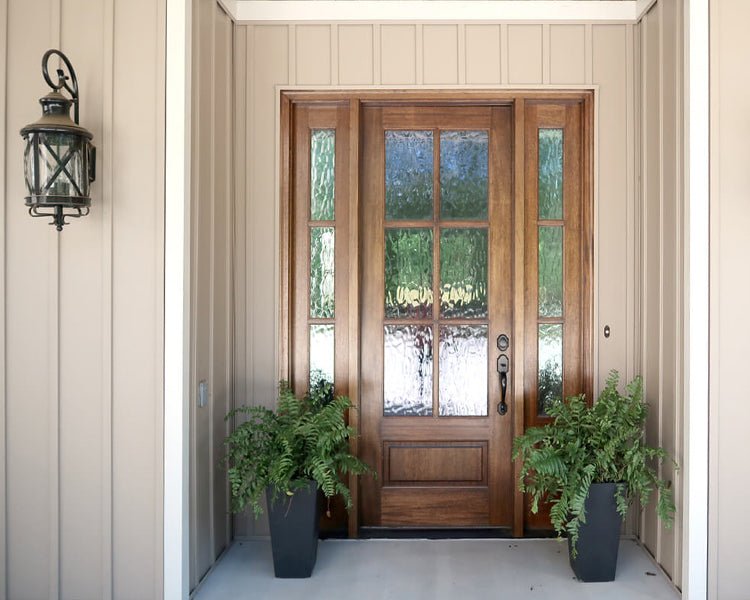
A glass front door alters much more than just the visual style. Picking proper acoustic glazing requires looking at the glass thickness. You must also check any hidden laminated interlayer. The air space layout and the tight edge holding methods matter greatly. Special sun coatings and trapped argon gas mostly help with winter heat saving. Without a matching acoustic test, these thermal features do not provide a trusted number for front door noise reduction. You must always read the glass lab report next to the details about the frame and moving seals.
The Luvindow Modern Aluminum Pivot Door comes in many layouts. You can order it with side glass, flat glass bars, and large clear areas. The basic product facts list double-pane glass. You can also pick an optional triple-pane setup if your chosen style allows it. A hidden automatic drop seal is another great option. In a turning pivot style, the floor touch point and the hinge spin location alter how the bottom rubber works. Static glass spots around the moving panel also belong to this exact same planning list.
Translate the Noise Complaint Into a Purchasable Specification
A brand new entry for a noisy street house needs a very detailed price quote. You cannot treat it like a simple door that just needs fresh weatherstripping. For a new system, the shopper needs an exact glass size and a clear sound target. The buyer also needs the correct lab test papers and tight details for every outer wall connection. For a basic repair, matching the old panel, base plate, and lock shape might matter much more than buying a totally new frame.
The Luvindow entry door collection offers both solid and clear glass choices. The final price sheet must list the total width and total height. It must show the glass layout, the swinging path, and the hinge type. It must also detail the base height, the front door seals, and the glass layers. When a seller hands over test papers, you must compare the tested lab size against your current house drawings. You must also check the tested bottom sweep style. Switching from a tall base to a flat floor track is never just a simple visual change.
Clear pictures of the old side frames, the finished floor, and any side windows help greatly during upgrade jobs. Sometimes, the buyer wants a guaranteed, measurable sound drop inside the house. If so, both sides must agree on the exact field testing rules before signing the final order. Outside noise types and inside room shapes can shift wildly between two random test days. If you skip this rule, a random drop in street cars could easily look like a fake boost in door quality.
For a special custom job, Luvindow can check your entry plans against weather limits, privacy needs, and glass desires. Talking about technical facts works much better when you share exact hole sizes. You should also share floor pictures and your wanted glass amounts. This works better than simply asking for a generic quiet door. A great next step is to discuss the entrance configuration and available acoustic evidence. You should do this long before you send the final size numbers to the factory floor.
Conclusion
The true volume of street noise a soundproof front door blocks depends entirely on the final installed frame and the local sound waves hitting it. A clear gap at the threshold needs a vastly different fix than noise bleeding through a giant glass side window. Spotting this exact difference early on keeps simple patch jobs totally separate from huge choices. Those bigger choices demand a brand new, fully tested door plan backed by real lab facts.
FAQs
Q1: How can I soundproof a front door without replacing it?
For a door in good shape, look closely at the rubber touch points near the side frames and the top edge. Check the bottom sweep, the lock catch spot, and all visible outer joints. Any fixes must work perfectly with your current metal locks and outside water drains. If loud noises continue after you fix these clear faults, you might need to check the heavy panel itself. You might also need to check the side glass or the big front wall.
Q2: Is an STC 35 front door suitable for traffic noise?
STC 35 points to a specific lab sample and a general sound math result. It does not act as a safe guess for the actual noise drop inside your specific living room. A street-facing upgrade gains much more value by looking at OITC numbers or deep sound wave facts. You must also look at the exact tested frame and all other hidden sound paths near the front entry.
Q3: Are solid wood front doors quieter than glazed aluminum doors?
Neither broad group is always quieter than the other. Heavy wood brings useful physical mass. Meanwhile, a metal frame with glass can easily hold thick acoustic glazing and tight perimeter gaskets. A direct comparison only makes real sense when both total systems hold matching lab papers. This means their base plates, locks, and frames must share similar lab proof.