


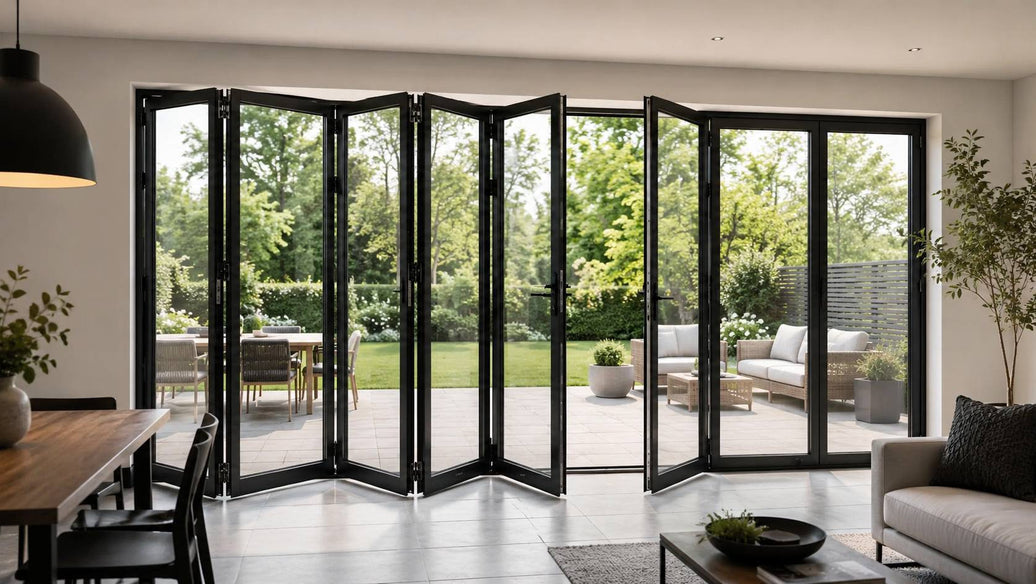
Large openings can make a villa, hotel suite, clubhouse, or commercial terrace feel more open, but they also create project pressure. A wide glass opening is heavier, more exposed, and more sensitive to installation accuracy than a standard patio door. For builders, developers, architects, and procurement teams, lift and slide doors should be reviewed as a project system, not only as a product style.
Can the frame support the glass size? Can the track and sealing system manage wind, rain, dust, and daily operation? Can the door arrive on site without damage? Will patio door installation align with flooring, drainage, and exterior paving? These details decide whether large sliding glass doors perform after handover.
Why Large Openings Need More Than Standard Sliding Doors
Large openings change the load on the whole door assembly. They also affect site access, delivery, and user operation.
Glass Size Changes the Load
The wider the opening, the more important frame rigidity, hardware capacity, rollers, and track alignment become. Sliding glass doors used in hotels, villas, and commercial terraces often carry larger insulated glass panels than standard residential doors. If the system is not selected for that load, long-term operation can become difficult.
Large sliding glass doors should therefore be reviewed around glass weight, sash size, frame depth, roller structure, and lock engagement. A door that looks suitable in drawings may still cause problems if the floor base is uneven or the hardware is not matched with the panel size.
Opening Width Affects Site Planning
A large door opening may connect an interior lounge to a pool deck, balcony, garden, or exterior dining area. Before ordering, the project team should confirm the rough opening, header condition, wall structure, finished floor height, sill support, and exterior drainage. These items are part of the door decision, not only installation details.
Daily Operation Should Match the Project
In hospitality and high-end residential spaces, users expect smooth operation. Lift and slide doors are often selected because the sash can be lifted from the sealed position and moved along the track with less friction. The result still depends on system selection, installation, and final adjustment.
Sealing Performance Should Be Planned as a System
Wide openings are more exposed to weather. Exterior sliding glass doors should be specified with the project climate and site exposure in mind.
Why Sealing Matters in Wide Openings
Rain, wind, dust, and temperature differences can affect exterior sliding glass doors, especially where the opening faces a terrace, coastal area, pool deck, or high-rise balcony. Sealing should not be treated as a single strip or one marketing claim. It is the combined result of frame design, track detail, threshold height, sash compression, sealant, locking points, and drainage.
Track, Threshold, and Locking Points Work Together
A stable track and correct threshold detail help the sash move smoothly and close consistently. EPDM or silicone sealant can support weather control, but it must work with proper installation and drainage. The door should never be described as completely waterproof under all site conditions.
Drainage Needs Early Coordination
Drainage should be checked before patio door installation begins. Exterior paving, balcony waterproofing, terrace slope, and sill weep paths must all connect logically. Even well-specified aluminum sliding glass doors can perform poorly if water collects around the track because the surrounding floor was not planned correctly.
Product Fit: Waterproof Lift Slide Patio Doors
For projects that need large glazed access, commercial sliding door use, and sealing review, Waterproof Lift Slide Patio Doors can be considered as one option.
The product is positioned for sliding applications and commercial use, with hotel projects listed as an application direction. Confirmed product details include a 2.0mm thick extruded aluminum profile, Roto or Siegenia hardware, IGCC/SGCC certified fully tempered insulation glass, optional fixed or sliding screens, and a sealing system using EPDM or silicone sealant. These details fit projects that need large sliding glass doors with controlled operation, glass safety, and project-level coordination.
The same page also describes project solution capability, including graphic design and total solution support. For B2B buyers, this matters because custom sliding glass doors should be checked against drawings, opening dimensions, site access, and delivery sequence before production.
For broader project planning, Luvindow provides door systems for residential, hospitality, and commercial applications. When a large opening project involves more than one entrance type, teams can also review all doors to compare sliding doors, hinged doors, folding doors, and other door options within the same project package.

Site Handling Comes Before Final Ordering
Large panels can be difficult to replace quickly if damage happens during transport or storage. Site handling should be reviewed before the purchase order is confirmed.
Confirm Access Routes Before Production
Contractors should confirm truck access, unloading area, elevator size, crane or hoist access, corridor width, temporary storage space, and the path from unloading point to opening. These checks matter for villas, hotels with finished interiors, and commercial projects with limited loading areas.
Packaging and Labeling Reduce Risk
Large sliding glass doors need protective packaging for long-distance shipment and site movement. The product page describes protective film, paper board, air bubble film, and plywood crate packaging. For project teams, the key value is not only protection. Clear packaging and labeling help installers match panels, tracks, screens, and hardware with the correct opening.
Storage Conditions Affect Final Installation
Doors should be stored upright where possible, protected from impact, and kept away from wet or uneven ground. Hardware and screens should stay labeled until installation. Poor storage can affect frames, glass edges, track surfaces, and finish quality before the door is installed.
Installation Planning for Tracks, Sills, and Openings
Patio door installation quality depends on how well the opening is prepared before the door arrives.
Check Floor Level and Threshold
Sliding systems are sensitive to level. The track needs a stable base, correct support, and coordination with finished flooring. If the slab, terrace, or interior floor is not ready, the installer may need field adjustment that affects operation.
Coordinate Drainage With Exterior Paving
Exterior paving, balcony waterproofing, and terrace slope should be coordinated with the sill. The door cannot compensate for poor site drainage by itself. Buyers should confirm where water will move during heavy rain and whether the sill area can be maintained after handover.
Confirm Screen and Hardware Options
Fixed and sliding screens may affect cleaning, storage, and user access. Hardware selection should match glass size and use frequency. For aluminum sliding glass doors in hospitality or coastal settings, screen and hardware decisions should be finalized before production.
Project Coordination Questions Buyers Should Ask
Before ordering, the project team should confirm opening size, structural condition, floor level, sill support, and whether the opening connects to a balcony, pool deck, garden, or commercial terrace.
The glass package should match the project. Tempered insulation glass, acoustic needs, thermal comfort, safety requirements, and climate exposure should be reviewed together.
Buyers should also ask how the door will be delivered and installed. Delivery schedule, storage, lifting method, installer readiness, and coordination with flooring or waterproofing can affect the final result.
Common Risks in Large Sliding Door Projects
The first risk is choosing a door before checking the site. A product may look correct, but access routes, rough opening condition, terrace slope, and floor level can change the final specification.
The second risk is treating sealing as a product feature only. Sealing depends on the door system, installation, drainage, threshold, and maintenance.
The third risk is underestimating glass handling. Large glass doors require careful transport, storage, lifting, and installation sequencing.
For related planning around wide glazed openings, project teams can also read Large Glass Sliding Doors: A Guide to Indoor-Outdoor Living and Better Views.
Conclusion
Lift and slide doors for large openings should be specified as project systems, not only as wide glass doors. The right result depends on frame strength, hardware, glass selection, sealing, drainage, packaging, site handling, and patio door installation planning.
For villa, hotel, resort, or commercial projects that require large sliding glass doors with sealing and site coordination support, share your opening size, drawings, site conditions, glass needs, delivery route, and installation timeline with Luvindow so the sliding door package can be reviewed before ordering.
FAQ
Q:Are lift and slide doors suitable for large openings?
A:Yes, when the frame, hardware, glass, track, drainage, and installation method are specified for the opening size and project conditions. Large openings should be reviewed before ordering.
Q:What should builders check before ordering exterior sliding glass doors?
A:Builders should check opening size, floor level, sill support, drainage path, glass package, hardware, screen option, delivery access, storage space, and installation sequence.
Q:What affects patio door installation quality?
A:Patio door installation quality depends on rough opening accuracy, floor level, track support, drainage, sealant selection, anchoring method, hardware adjustment, and coordination with flooring and exterior paving.










Leave a comment