


Mixed-use buildings rarely have a simple ground floor. One elevation may include retail bays, a residential lobby, a cafe, service access, and amenity space. For architects, developers, general contractors, and facade teams, storefront window wall systems should be planned as one coordinated frontage, not as separate pieces of fixed glass and doors.
Fixed glass sets the storefront rhythm. Entrances affect movement, accessibility, security, and code review. Sills, drainage paths, thresholds, and floor finishes affect installation. If these decisions are solved after shop drawings are approved, the project may face revisions or delays during tenant fit-out.
Read the Ground-Floor Program Before Drawing the Storefront
A mixed-use facade should begin with how the building will be used. The storefront grid should support the program, not only the elevation.
Retail Bays, Lobbies, and Service Access Have Different Needs
Retail frontage usually needs visibility and clear display areas. A residential lobby needs secure access, weather control, and a clear arrival point. A service entrance may need a more practical door configuration and better coordination with back-of-house routes.
When these zones are treated the same, the facade may look clean in drawings but become difficult to operate. Aluminum storefront windows should be mapped by tenant function, access needs, security level, and expected daily use.
Tenant Flexibility Should Be Considered Early
Ground-floor tenants may change over time. A storefront that works for a showroom may later need to support a cafe, clinic, office, or small retail unit. The system should allow reasonable coordination for signage, interior partitions, access control, and display lighting.
The Grid Should Follow Use and Appearance
Mullion spacing, glass panel width, door position, and transom height should work together. A facade can lose its order when commercial exterior doors with glass are added after the fixed glass layout has already been approved.
Fixed Glass Sets the Storefront Rhythm
Fixed panels often decide how the storefront reads from the street.
Mullion Spacing Controls the Visual Line
Mullions create the vertical rhythm of the facade. If their spacing does not match tenant bays, interior columns, ceiling lines, or door frames, the storefront can look divided in the wrong places. Architectural aluminum windows should be reviewed with the building elevation and interior fit-out plan.
Large Fixed Panels Need Handling and Support Planning
Large glass can improve street visibility, but it also affects fabrication, transportation, unloading, and installation. The team should confirm panel size, glass thickness, site access, temporary storage, lifting method, and installer access before final approval.
Fixed window aluminium sections should also be reviewed for sill support, anchoring, drainage, and sealant access. These details affect long-term facade performance, especially where the storefront faces rain, wind, cleaning work, and regular public use.
Glass Clarity and Privacy Should Match the Frontage
Retail display zones may need clear glass, while lobbies, offices, or amenity areas may need more privacy. Tint, reflection, interior lighting, and after-hours visibility should be discussed early. Safety glass and local code requirements should also be reviewed by project location and occupancy.
Entrances Must Fit Into the Window Wall Grid
Doors should not be selected after the facade grid is complete. In storefront window wall systems, each entrance should be part of the glass and mullion layout.
Main Doors, Tenant Doors, and Service Doors Are Not the Same
A main residential lobby entrance may need access control, weather protection, and a clear address identity. A tenant door may need visibility and business-hour convenience. A service door may prioritize durability and controlled access. Treating every opening as the same commercial front door can create performance and coordination problems.
Sidelites, Transoms, and Door Frames Need Early Coordination
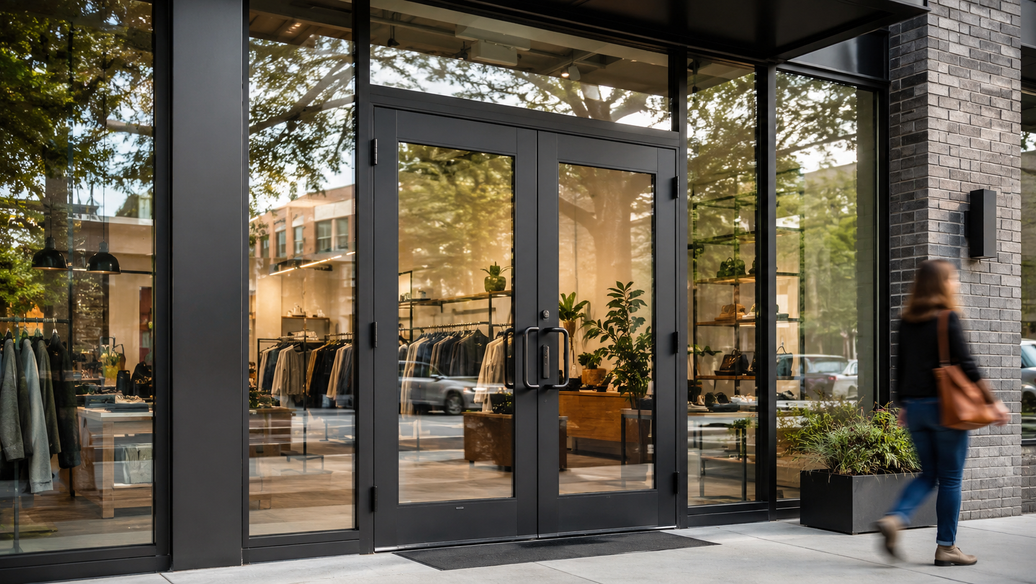
Commercial glass entry doors often connect with sidelites, transoms, and fixed panels. Door frame depth, closer placement, hardware clearance, and threshold position should be checked against the adjacent glass system. The door should not interrupt the fixed glass line or create weak points in sealing and support.
Clear Opening and Hardware Review Should Happen Before Production
Clear opening width, threshold height, door swing, locks, closers, access control, panic hardware, and ADA review should be confirmed before manufacturing. Requirements vary by location, occupancy, and adopted code, so the project team should not leave these items for the installer to solve on site.
Resolve Sill, Drainage, and Floor Transitions Early
The base of the storefront is often where field issues appear. The glass system may meet exterior paving, interior floor finishes, waterproofing, and door thresholds in a very small zone.
Exterior and Interior Levels Affect the Threshold
A storefront entrance must respond to slab level, finished floor height, exterior paving, and water movement. If these levels are not aligned early, the threshold may become too high, the door may not clear the floor finish, or water management may be compromised.
Drainage Must Work With the System
Drainage should be reviewed across fixed panels, door openings, sill tracks, and adjacent wall details. Sealant, flashing, and weep paths should be coordinated before installation. A clean elevation is not enough if water is not managed.
Trade Coordination Reduces Rework
Flooring, cladding, waterproofing, electrical access control, signage, and interior partitions may all connect to the storefront. The installation sequence should be discussed before materials arrive. For project teams comparing facade references, the Luvindow project case showroom can help review how doors, fixed glass, and window wall packages are used in completed projects.
Product Fit: DOORWIN WINDOWS INC Commercial Doors for Modern Storefronts
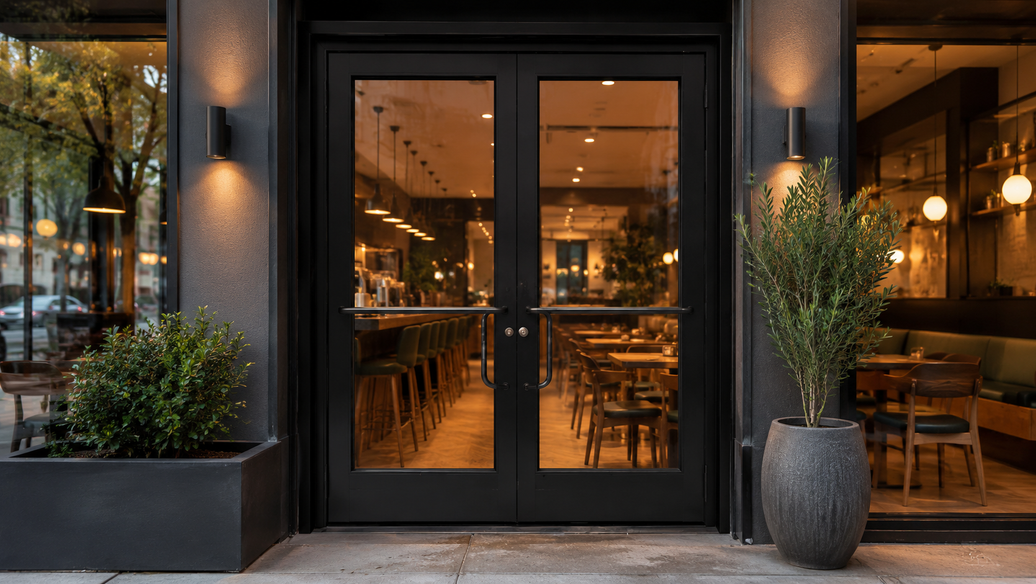
For mixed-use projects where a glazed entrance is needed at a lobby, tenant frontage, showroom, restaurant, cafe, or commercial corridor, Commercial Doors for Modern Storefronts can be considered as one door option within the larger storefront facade plan.
This product supports single and double opening configurations. It uses an integrated molding hidden hinge system, double-layered tempered glass, and high-quality door locks. It also offers energy-efficient glass and sound-dampening glass for commercial spaces that need better entrance comfort and acoustic control.
For storefront window wall systems, this door should still be reviewed together with fixed glass panels, sidelites, transoms, sill lines, drainage, access control, door closer needs, and local code requirements. It should not be treated as an isolated door product when the project requires alignment between entrance openings, fixed glass, and the storefront grid.
For broader product planning, Luvindow offers window and door systems for residential and commercial applications. The door choice should be reviewed with facade layout, tenant function, glass requirements, and installation sequence.

From Shop Drawings to Site Handoff
A mixed-use storefront package should move from design to fabrication only after the main field conditions are checked.
Confirm Field Dimensions Before Final Fabrication
Storefront zones may meet concrete, steel, masonry, or finished slab edges. Field dimensions, jamb conditions, ceiling height, and floor levels should be confirmed before final production. Small field differences can affect fixed glass sizing, commercial glass entry doors, threshold details, and sealant joints.
Plan Labels Around Elevation and Bay Numbers
Labels should match elevation grids, tenant bays, opening marks, and floor locations. This helps installers identify fixed panels, doors, sidelites, transoms, and hardware packages without repeated sorting.
Coordinate Installation With Other Trades
Access control, electrical wiring, storefront signage, flooring, waterproofing, and tenant partitions should not be treated as separate late-stage work. Their interfaces should be reviewed before the storefront package reaches the site.
Final Review Before Manufacturing
Before issuing approval, project teams should confirm whether the fixed glass and entrances are aligned, whether threshold and accessibility details are settled, and whether delivery and handling conditions are practical.
They should also review future tenant changes. For mixed-use buildings, retail podiums, or ground-floor commercial facade projects, send your elevations, storefront grid, entrance layout, glass requirements, and site conditions to Luvindow so the window wall package can be reviewed before ordering.
Conclusion
Storefront window wall systems for mixed-use buildings should be planned as integrated facade packages. Fixed glass, entrance doors, mullion alignment, thresholds, drainage, glass selection, site handling, and future tenant needs all affect the final result.
The safer approach is to solve the frontage as a system before production begins, so fixed glass, commercial glass entry doors, floor transitions, and field dimensions can work together.
FAQ
Q:What should mixed-use buildings check before ordering storefront window wall systems?
A:Project teams should check fixed glass layout, entrance locations, mullion alignment, clear opening width, glass type, threshold design, drainage, site access, and installation sequence before ordering.
Q:Are aluminum storefront windows suitable for mixed-use buildings?
A:Yes, when the frame, glass, door integration, and installation details match the building frontage. They can support visibility, durability, and facade consistency across retail, lobby, and shared spaces.
Q:How should commercial glass entry doors connect with fixed glass panels?
A:Commercial glass entry doors should be coordinated with sidelites, transoms, mullions, thresholds, hardware, and frame reinforcement. The door should be treated as part of the storefront window wall system, not as a separate item.









Leave a comment