


Residential replacement work is seldom simply a window swap. Existing openings may have irregular walls, aged trim, drainage issues, or restricted frame depth. For builders, renovation contractors, and window dealers, replacement casement windows should be specified as a complete system, not only as a glass unit or a frame color.
Low-E glass can help improve comfort. It does this by managing heat transfer and solar exposure. Yet the overall result also depends on the casement window frame, hardware, screen position, exterior clearance, and installation method. A window that performs effectively on paper can still create site problems. This occurs if the sash projection blocks a patio. The screen may conflict with interior trim. Or the frame may not suit the existing opening.
This guide explains how to evaluate replacement casement windows with Low-E glass from a B2B project perspective. It centers on frame fit, daily operation, and practical comfort checks.
Why Replacement Casement Windows Need Technical Review
Replacement projects start from existing conditions. Unlike new construction, the opening is already fixed, and the surrounding wall, sill, cladding, and trim may limit what can be installed. Before discussing finishes or price, the project team should confirm whether the window type suits the opening and how it will operate after installation.
Start with the Existing Opening
A proper survey should include more than width and height. Builders should review rough opening size, old frame condition, wall depth, sill slope, exterior trim, drainage path, and interior finish clearance. These details affect whether the new casement window frame can be installed cleanly without forcing adjustments on site.
Match Performance to Room and Climate
Low-E glass is useful when the project needs better heat control, daylight, and indoor comfort. However, glass selection should match the room and climate. A west-facing living room, a bedroom in a cold region, and a kitchen above a sink may need different priorities.
Energy efficient casement windows should be judged by the full assembly. Glass coating matters, but so do frame material, spacer design, sealing, hardware pressure, and installation quality.
Glass Details: Low-E, Edge Comfort, and Condensation Risk
Glass is often the first specification item buyers ask about, but it should not be treated as a single label. For replacement projects, the better question is how the glass package supports comfort under real room conditions.
Low-E Glass and Solar Control
Low-E glass helps manage heat movement through the window surface. In warm regions, it can help reduce unwanted heat gain. In cooler regions, it can support better indoor comfort when paired with suitable glazing and sealing. For residential replacements, Low-E casement windows are often considered where daylight, comfort, and practical ventilation all matter.
Large glass areas, strong sun exposure, or rooms with comfort complaints may require a more detailed glazing discussion before final ordering.
Warm Edge Spacer and Glass-Edge Performance
The edge of the glass unit is a common weak point in thermal performance. A warm edge spacer can help reduce thermal bridging around the glass edge and support better comfort near the frame. It may also help reduce condensation risk when indoor and outdoor temperatures differ.
This is useful in replacement work because older openings often have comfort issues near the window perimeter. The glass package should be reviewed together with the frame, seal, and drainage details rather than separately.
Frame Fit: Why the Casement Window Frame Matters
The frame is where product specification meets the existing building. If the frame does not suit the opening, even a good glass package may not deliver the expected result.
Measure Fit Before Selecting Finish
A replacement casement project should confirm frame depth, sill condition, exterior cladding, interior trim depth, and required installation method. Builders should also check whether the window will need a flange, a no-flange frame, or another project-specific installation approach.
Consider Thermal Break Aluminum Frames
For projects that need aluminum durability with better thermal control than standard aluminum, thermally broken aluminum windows can be a practical option. The thermal break helps reduce heat transfer through the frame and sash, supporting a more stable interior environment.
Aluminum frame casement windows are also useful where the project needs exterior durability, slim profiles, and consistent finish options. The coating should still be selected based on sun exposure, rain, coastal air, and maintenance expectations.
Daily Operation: Crank Use, Screens, and Clearance
Replacement casement windows must work well after handover. The daily operation of the sash, handle, screen, and surrounding space should be checked before the window schedule is approved.
Crank-Out Operation for Hard-to-Reach Areas
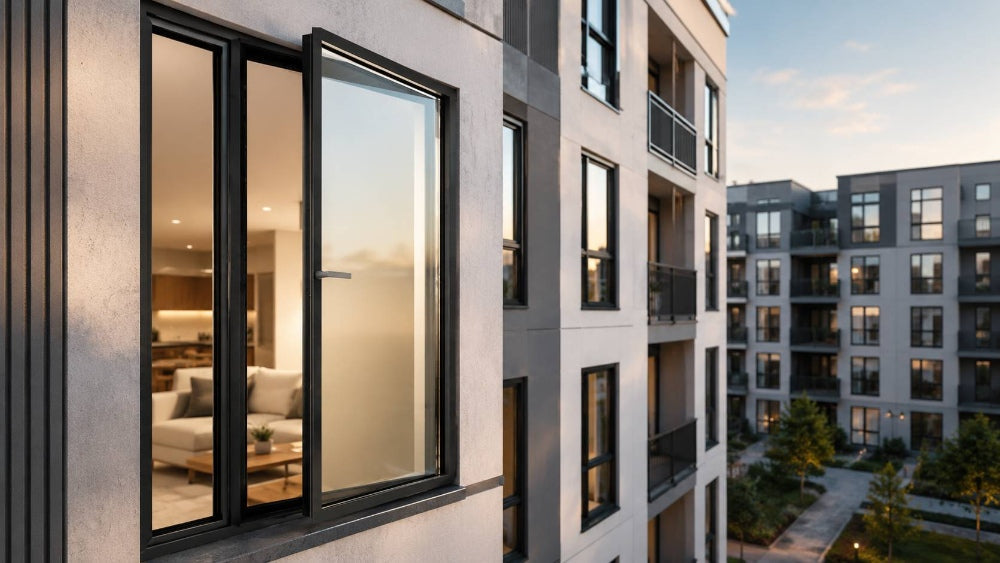
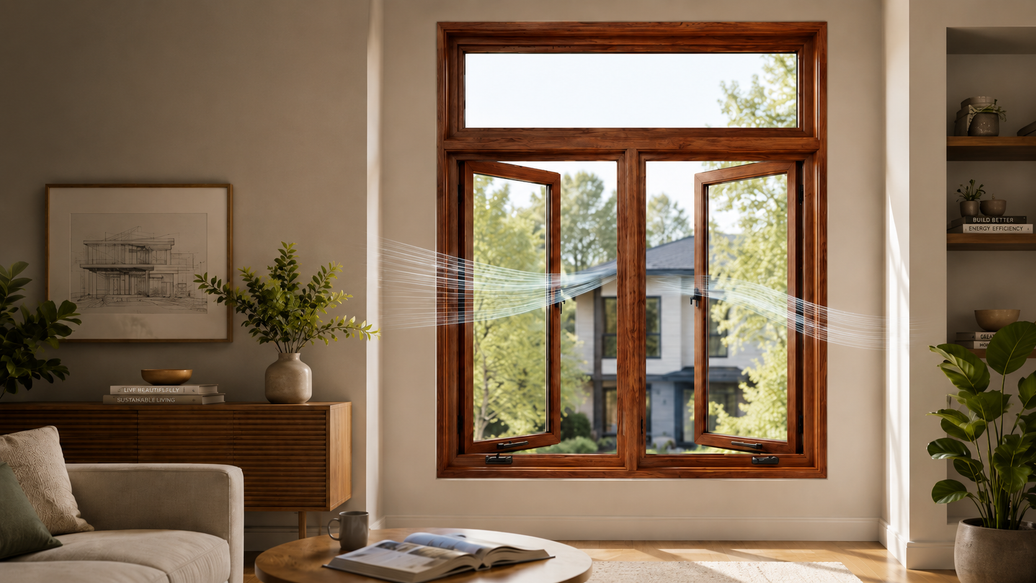
Casement windows open outward from side hinges. Aluminum crank out windows can work well above kitchen sinks, counters, laundry areas, and other openings where direct pushing or lifting is inconvenient. The crank handle allows controlled opening from inside the room.
Still, the handle position and user access should be confirmed before ordering.
Screen Position and Exterior Clearance
Outward-opening casement windows often use interior-mounted screens. This detail affects trim depth, handle access, blinds, curtains, and maintenance. Builders should confirm the screen type early, not after the frame and hardware have already been selected.
Exterior clearance is just as important. An outward-opening sash may project into a walkway, patio, balcony, garden bed, or exterior shutter zone. Opening direction and sash projection should be reviewed in drawings before installation begins.

For replacement projects that need Low-E glass, aluminum frame durability, crank-out operation, and thermal-break frame performance, Black Aluminum Casement Windows can be considered as one specification option.
The LUVINDOW AL+70 casement window utilizes precision-extruded T66 aluminum alloy for enhanced structural stability. The frame is engineered with heavy-duty profile walls, maintaining a base thickness of 1.6mm and reinforcing primary load-bearing points to 2.0mm. It includes Low-E Silver Coating, Warm Edge Spacer, a thermally broken aluminum profile system using PA66 nylon, optional Germany Roto or Siegenia hardware, and 304 S.S protection screen. Fluorocarbon coat finishing is also available on request for more demanding environmental conditions.
For broader project comparison, Luvindow offers window and door systems for residential and commercial applications. Teams can also review all windows when a replacement package includes several opening types.
Specification Checklist Before Sending an Inquiry
A clear inquiry helps reduce drawing revisions. Before requesting a quotation, builders should prepare the main project details.
Project and Opening Information
Confirm whether the work is a renovation, full replacement, or partial replacement. Include opening sizes, room location, quantity, wall condition, exterior access, interior trim condition, and photos of existing windows where possible.
Glass and Performance Requirements
Confirm Low-E glass needs, warm edge spacer expectations, condensation concerns, sound control needs, climate exposure, and target U-factor if available. Energy efficient casement windows should be reviewed against the whole opening, not only the glass label.
Operation and Hardware Details
Confirm opening direction, crank handle position, sash projection, screen type, hardware preference, lock system, exterior clearance, and delivery schedule. If your team is preparing a residential replacement window schedule, share your drawings and project requirements with Luvindow so the specification can be reviewed before ordering.
Common Mistakes When Specifying Replacement Casement Windows
The first mistake is choosing the window before checking the opening. Replacement work should start with the existing wall condition, not a product image.
The second mistake is treating Low-E glass as the only performance factor. Frame thermal break, spacer design, sealing, drainage, and installation quality also affect final comfort.
The third mistake is ignoring screen position and exterior clearance. Interior-mounted screens need room for trim and window treatments, while outward-opening sashes need enough outdoor space.
The fourth mistake is leaving hardware decisions too late. Hardware affects operation, sealing pressure, user comfort, and long-term maintenance. It should be confirmed before final ordering.
Conclusion
Replacement casement windows with Low-E glass should be specified as a complete system. Glass performance matters, but frame fit, thermal break design, spacer selection, hardware, screens, clearance, and installation details all affect the final result.
For builders, contractors, and window dealers, the safer path is to review the existing opening first, then select the glass, frame, hardware, and operation details that fit the project. This approach helps residential replacement work move more smoothly from quotation to installation.
FAQ
Q:Are replacement casement windows with Low-E glass suitable for residential projects?
A:Yes, when the frame, glass, hardware, and installation details match the existing opening. Builders should check opening size, wall condition, Low-E glass needs, screen position, and exterior clearance before ordering.
Q:What should builders check before ordering aluminum frame casement windows?
A:Builders should confirm rough opening size, frame depth, exterior finish, Low-E glass requirement, hardware type, crank handle position, screen option, drainage path, and installation method.
Q:Are thermally broken aluminum windows useful for energy efficient casement windows?
A:They can help reduce heat transfer through the frame compared with standard aluminum designs. Final performance still depends on glass package, spacer, seal quality, installation, and climate conditions.







Leave a comment