Restaurant and cafe entrances work harder than many storefront details suggest. They welcome customers, support street visibility, protect the business after closing, and influence comfort near seating, waiting, and ordering areas. For contractors, architects, and food service operators, commercial storefront doors should be specified for daily use, not appearance alone.
A glass entrance can make a restaurant or cafe feel open from the street, but the same door also faces repeated opening, fingerprints, outdoor noise, temperature changes, and security needs.
Why Restaurants and Cafes Need Different Storefront Door Planning
Restaurants and cafes are not the same as standard retail shops. Customers may sit near the door, staff may move between front and back areas, and pickup traffic may increase during certain service periods. The entrance becomes part of the customer experience.
Customer Flow Is Steady During Service Hours
A restaurant entrance may stay calm between service periods and become busy during breakfast, lunch, dinner, or pickup windows. A cafe may see shorter visits, more takeout customers, and frequent door movement during morning hours. Commercial exterior doors should therefore be selected for steady daily use, smooth closing, and practical access, rather than only for facade design.
The better approach is to match the door system to the actual service pattern, opening size, staff access, and maintenance expectations.
Comfort Near the Entrance Affects Customers
Many food service spaces place tables, host stands, pickup shelves, or waiting benches near the front zone. If the door allows too much street noise, cold air, heat, or wind movement, the first few meters of the interior can become less comfortable.
For commercial entrance doors, comfort should be reviewed together with the seating layout, door swing, HVAC plan, and surrounding storefront glass.
Glass Visibility Supports the Storefront
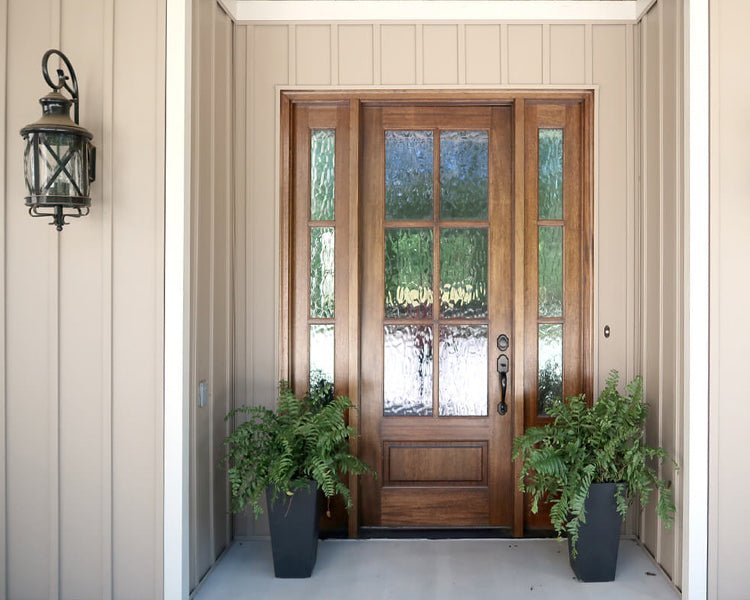
Restaurants and cafes depend on what passersby can see: lighting, interior design, display counters, and customer activity. Commercial glass entry doors help create that visual connection. At the same time, the door must support locks, tempered glass, frame strength, and after-hours security.
Noise Control: What Glass Storefront Doors Should Address
Noise control is one of the clearest differences between a normal storefront door and a food service entrance. Conversation, ordering, waiting, and dining all depend on a controlled acoustic environment.
Street Noise Around Dining and Ordering Zones
Street-facing restaurants and cafes may deal with vehicles, pedestrians, delivery riders, outdoor seating, and nearby businesses. If the entrance is close to the counter or seating area, noise can affect customer comfort and staff communication.
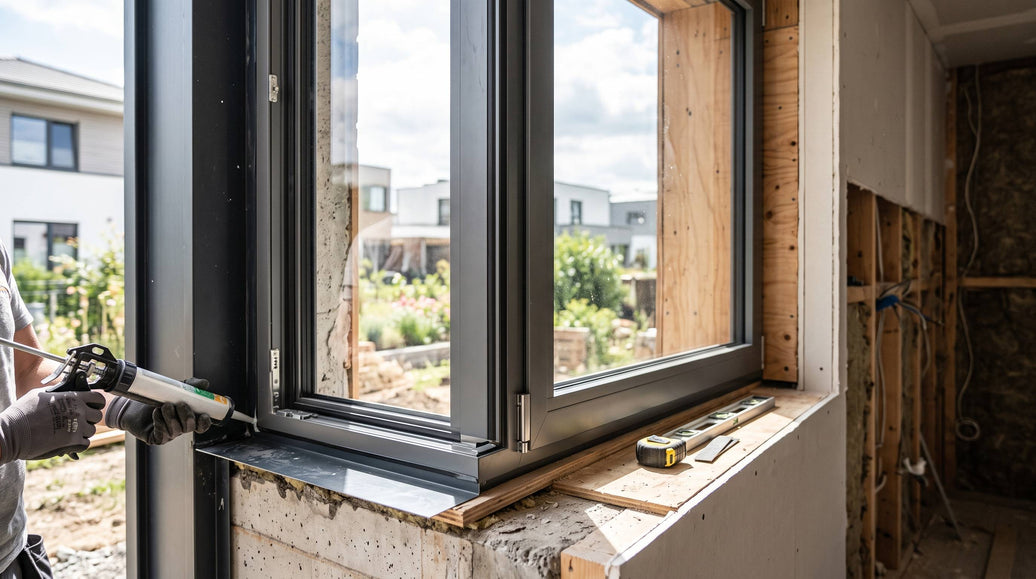
Commercial exterior doors with glass should be reviewed with the full front wall. Door glass, frame sealing, adjacent fixed glass, wall openings, and installation quality all affect the final sound environment.

Sound-Dampening Glass and Door Sealing
Sound-dampening glass can help reduce the impact of outdoor traffic, delivery activity, and nearby street noise. For food service environments requiring higher STC or OITC performance, laminated glass with an acoustic interlayer inside the insulated glass unit is usually more effective than standard tempered glass alone. However, no glass door should be treated as a standalone soundproofing solution. The door leaf, weather-stripping, threshold, closer setting, frame, and surrounding facade must work as one system.
Glass Clarity and Condensation Control
A storefront door should stay clear enough to support visibility. A better insulated glass unit can help reduce condensation risk when indoor and outdoor temperatures differ, especially in cold weather or humid food service environments.
Comfort Near the Door: Air Movement, Layout, and Daily Use
Energy-efficient glass can support entrance comfort, but restaurants and cafes open their doors often. The door, glass, seals, HVAC layout, air curtain, vestibule, and seating plan should be reviewed together. A commercial storefront door may help reduce discomfort, but frequent opening will still bring outdoor air into the space.
In colder regions, hot climates, or windy street locations, air curtains or vestibules can help create a more stable entrance zone when paired with suitable commercial entrance doors. Tables, waiting benches, and pickup shelves should not block the door path or sit too close to the swing area without planning.
Daily Use: Hardware, Locks, Cleaning, and Maintenance
Commercial entry doors for restaurants and cafes need to operate smoothly through repeated service periods. The most important details are often hardware, lock planning, and ease of maintenance.
Hinges and Door Operation
The hinge system should match door size, glass weight, use frequency, and maintenance access. A concealed or hidden hinge can create a cleaner storefront appearance, but the full door system still needs to be checked against actual daily use.
Contractors should review door closer settings, swing direction, hardware access, and whether the door can remain aligned after repeated opening.
Locks and After-Hours Security
A restaurant entrance must balance business-hour safety, local life-safety code review, and after-hours security. In many North American assembly occupancy projects, especially where the occupant load reaches the threshold set by the adopted code, the door system may need to accommodate panic hardware, crash bars, or exit devices for emergency egress. Glass type, lock systems, panic hardware, and frame structures should be reviewed together so the entrance can support code compliance during business hours while still providing stronger overnight protection.
Cleaning and Front-of-House Wear
Food service entrances face fingerprints, dust, weather marks, and frequent cleaning. Door handles, glass panels, threshold details, and frame finish should be easy to inspect and maintain.
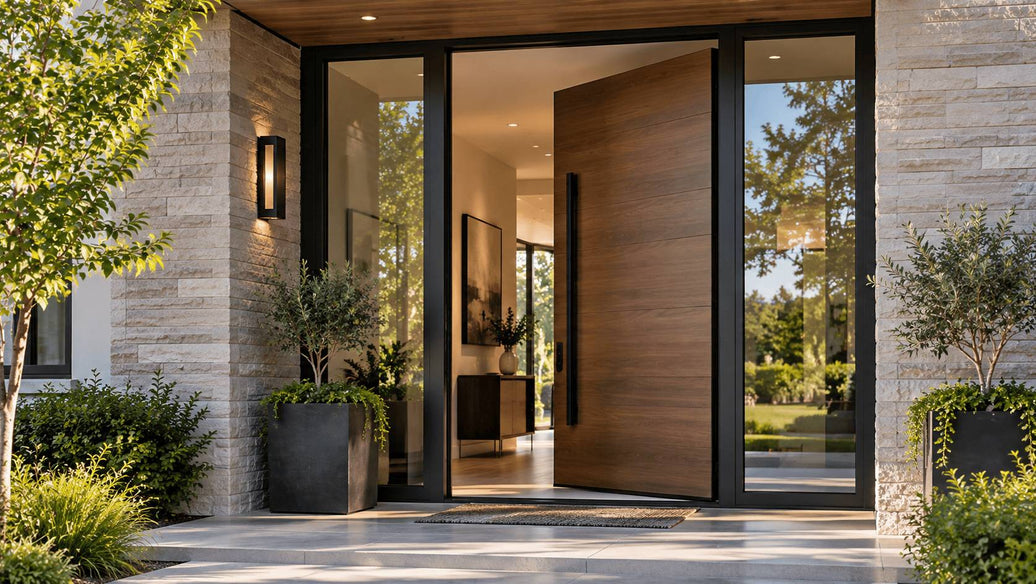
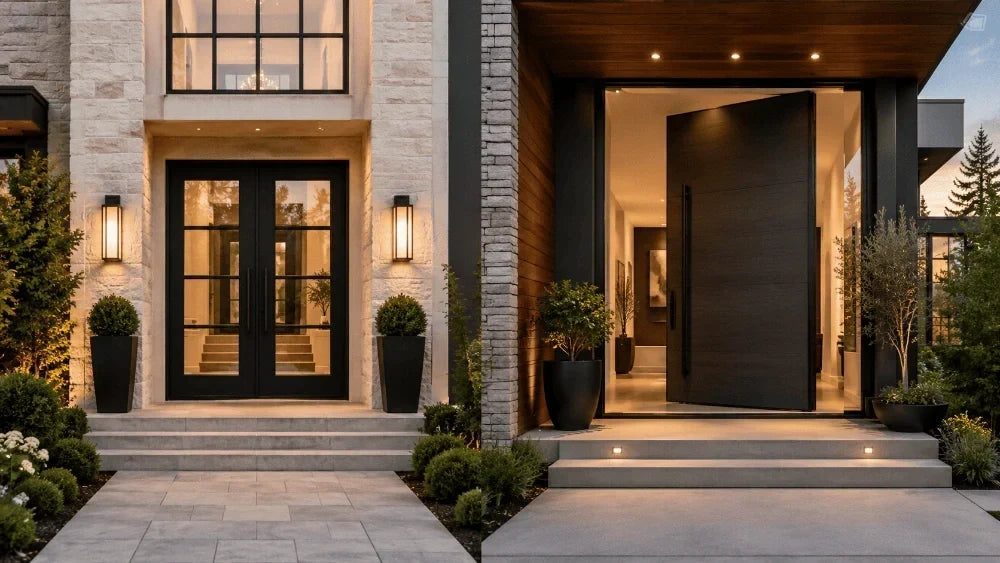
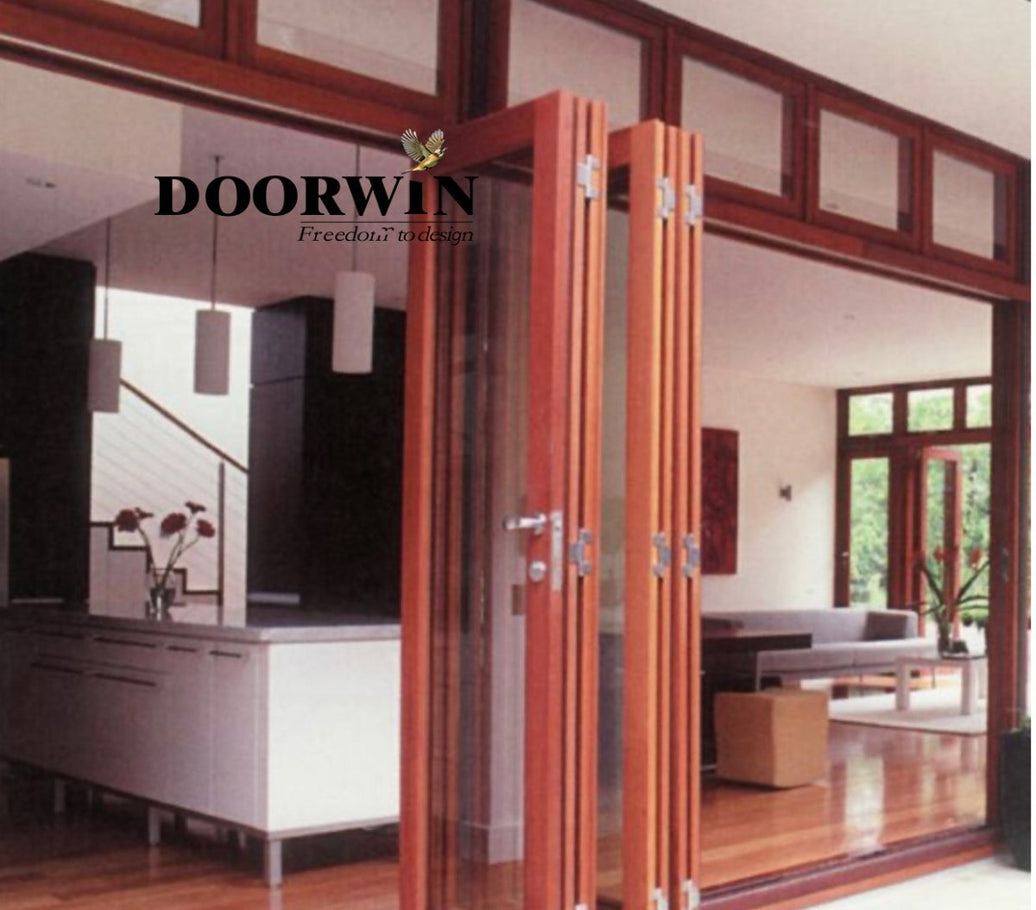
For restaurant, cafe, showroom, and street-facing storefront projects, Durability Commercial Glass Doors for Storefront can be considered when the entrance needs glass visibility, security planning, and steady daily operation.
The product supports single and double opening configurations. It uses an integrated molding hidden hinge system, double-layered tempered glass, and high-quality door locks. It also offers energy-efficient glass and sound-dampening glass for commercial spaces that need better entrance comfort and acoustic control.
The door should still be reviewed against project drawings, opening size, local code needs, and service conditions. For broader planning, Luvindow provides window and door systems for residential and commercial applications, and project teams can compare other entrance options through all doors.
For teams comparing different storefront applications, the Luvindow project case showroom can also help review how window and door systems are used in completed residential and commercial projects.
Specification Checklist Before Ordering Restaurant and Cafe Storefront Doors
A clear inquiry helps reduce revisions and late changes. Before ordering, contractors should prepare the main site and door requirements.
Opening Size and Door Configuration
Confirm single or double door configuration, clear passage width, opening direction, door swing, delivery access, staff access, and connection with fixed storefront glass or window wall systems.
Glass, Hardware, and Code Review
Confirm tempered glass, sound-control needs, condensation concerns, hinge type, lock system, handle style, door closer, frame finish, and threshold details. For U.S. restaurant and cafe projects, ADA requirements should be reviewed early, including clear opening width, threshold height, accessible hardware operation, maneuvering clearance, and closer settings where applicable.

Site Conditions and Daily Operation
Confirm whether the entrance faces a street, mall corridor, patio, or outdoor seating area. Also review wind exposure, air curtain or vestibule plans, cleaning access, and whether customers will wait or sit near the entrance.
Common Mistakes in Restaurant and Cafe Door Planning
The first mistake is choosing only by appearance. A glass door may look suitable in a rendering, but food service projects also need noise control, door clearance, locks, hardware, and cleaning convenience.
The second mistake is treating comfort as a glass-only issue. Commercial glass entry doors can help, but seating layout, HVAC planning, air movement, and opening frequency also affect the entrance zone.
The third mistake is leaving ADA, threshold, and closer details too late. These details can affect inspection, accessibility, and daily operation.
Conclusion
Commercial storefront doors for restaurants and cafes should be planned around the real front-of-house environment. The right door should support visibility, noise control, comfort near the entrance, daily operation, after-hours security, and code review.
For restaurant, cafe, or street-facing food service projects, share your opening size, glass needs, traffic pattern, noise concerns, and hardware requirements with Luvindow so the storefront door specification can be reviewed before ordering.
FAQ
Q:What type of commercial storefront doors work best for restaurants and cafes?A:Restaurants and cafes usually need doors that support glass visibility, steady daily use, suitable locks, easy cleaning, and comfort near the entrance. The final choice should match opening size, seating layout, street exposure, and local code requirements.
Q:Can commercial glass entry doors help reduce street noise in cafes?A:They can help when specified with suitable glass, frame sealing, and installation details. Sound control should be planned together with the surrounding storefront glass, wall openings, door closers, and seating or ordering layout.
Q:What should contractors check before ordering commercial exterior doors with glass?A:Contractors should confirm opening size, single or double configuration, clear passage width, glass type, hinge system, lock requirements, threshold height, ADA review, frame finish, and connection with fixed storefront glass.