


A patio door is no longer just a back entry. In 2026 home design, it often shapes how a living room, kitchen, garden, deck, pool area, or terrace works as one connected space. That is why many homeowners, builders, and designers compare bifold patio doors and sliding patio doors before choosing the right system.
The practical answer is this: bifold patio doors are often a better fit when the project needs a wide opening and a stronger indoor-outdoor connection. Sliding patio doors usually work better when the space needs simple daily access, fewer moving panels, and a clean glass view when closed. The right patio door depends on the opening size, traffic flow, weather exposure, budget, and how the space will be used.
What Are Bifold Patio Doors?
Bifold patio doors feature multiple glass panels joined by hinges. When opened, the panels fold and stack to one side or both sides. This design allows a much larger part of the wall to open than many standard sliding patio door systems.
For homeowners who want to connect a living space directly with a patio or garden, bifold patio doors create a flexible transition. They are useful for entertaining, outdoor dining, and resort-style home layouts where the boundary between indoors and outdoors should feel open, bright, and functional.
How Bifold Patio Doors Work in Real Projects
The main benefit of bifold glass doors is not only the glass surface. It is the way the panels move. A well-designed folding system should glide smoothly on the track, align accurately when closed, and lock securely across multiple panels.
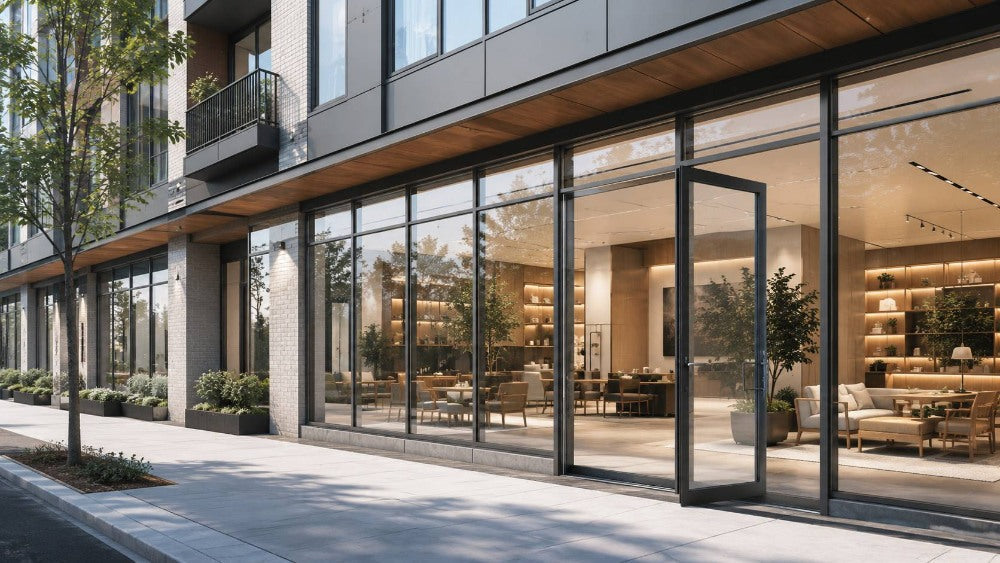
This is where material and hardware quality matter. For example, Aluminium Alloy Glass Folding Patio Doors from Luvindow use durable aluminum, a track-guided folding structure, sealing design, and coordinated hardware. These details matter in large patio openings where panel weight, long-term operation, and weather resistance cannot be treated as secondary issues.
What Are Sliding Patio Doors?
Sliding patio doors generally use one or more glass panels that move sideways along a rail. One panel commonly slides past or beside a fixed panel, though larger systems may use several moving panels.
This makes sliding patio doors suitable for tighter layouts. They require no swing room, and users can open one section for regular passage without moving several panels. For residences, balconies, modest patios, and basic replacement projects, sliding systems often feel straightforward and practical.
Where Sliding Patio Doors Perform Well
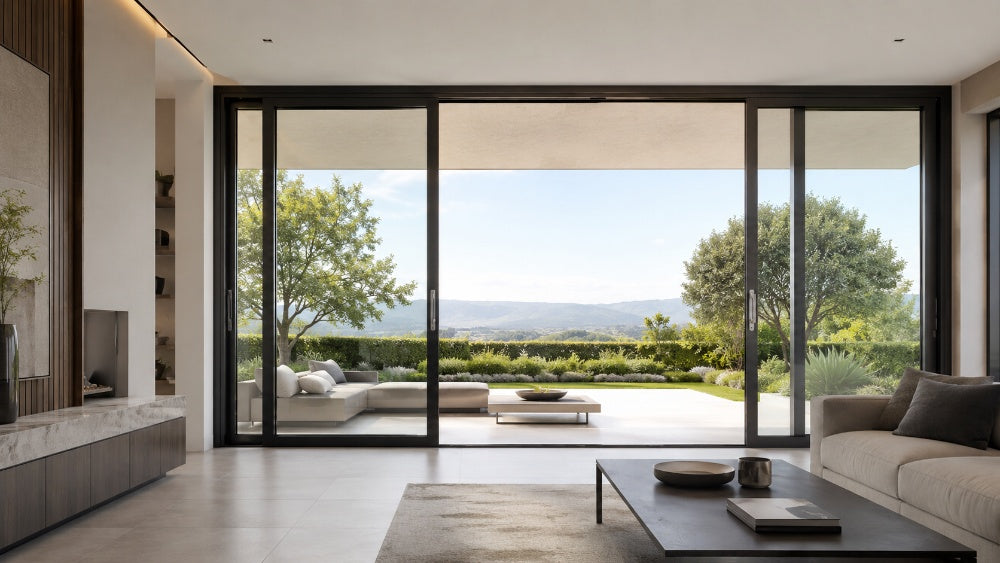
Sliding patio doors work especially well when the wall opening is moderate and the project does not need the full wall to open. They can provide broad glass views, steady access, and a familiar operation style.
They may also look cleaner when closed because they usually have fewer vertical frame divisions than folding doors. For homeowners who care most about the view through the glass when the door is closed, this can be an important advantage.
Bifold vs Sliding Patio Doors: Main Differences
The main difference is opening width. Bifold patio doors can fold aside and open most of the wall. Sliding patio doors usually keep part of the opening covered by a fixed or overlapping panel.
Another difference is daily use. Bifold doors are better for moments when the whole space should open. Sliding patio doors are convenient for regular movement in and out of the home.
For indoor-outdoor living, bifold patio doors usually create a stronger spatial effect. For simple everyday access, sliding systems often remain the easier option.
|
Comparison Point |
Bifold Patio Doors |
Sliding Patio Doors |
|
Opening width |
Wider opening, often most of the wall |
Partial opening in many standard layouts |
|
Daily use |
Best for full-space opening |
Best for quick access |
|
Closed appearance |
More vertical panel lines |
Often fewer panel lines |
|
Ventilation |
Strong airflow when fully open |
Moderate airflow |
|
Space planning |
Needs stacking space |
Needs track width |
|
Best use |
Large patios, gardens, villas, resorts |
Balconies, compact patios, replacements |
Which Patio Door Creates Better Indoor-Outdoor Living?

Indoor-outdoor living depends on more than having a glass door. The opening must support movement, views, airflow, and simple daily use. A door that looks impressive but blocks traffic or performs poorly in weather may not solve the real design problem.
Bifold Patio Doors Create a Wider Social Space
For broad openings, bifold patio doors often provide a stronger spatial result. When the panels fold aside, the living room can connect with a deck, poolside area, courtyard, or garden. This is helpful for homes designed around gatherings, natural airflow, and open views.
Expansive bifold glass doors can also make a room feel more adaptable. A dining area can extend toward the patio during gatherings. A family room can open toward the backyard during mild weather. In these settings, folding doors do more than provide access; they change how the space works.
Sliding Patio Doors Keep Movement Simple
Sliding patio doors remain valuable because they are easy to manage. For many homeowners, a single smooth sliding action is enough for routine entry. If the patio is small or the home has limited exterior space, sliding doors may be more practical.
They also work well when the goal is a consistent glass view rather than a fully opened wall. A compact city home, condominium, or balcony entry may gain more from a clean sliding system than from a larger folding layout.
Views, Natural Light, and Frame Design
Both door types can bring in natural light. The better choice depends on whether the user values the closed view or the open experience more.
Sliding patio doors can present a wide glass surface with fewer interruptions when closed. This makes them appealing for view-facing walls. Yet standard sliding patio doors do not usually open the full span.
Bifold patio doors may show more vertical lines when closed, but they deliver a stronger open-wall effect. For projects centered on large patio openings, this trade-off can be worthwhile. The real question is not only “Which door offers more glass?” but “How should the room function when the patio door is open?”
Energy Efficiency Depends on the Whole System
Energy performance should not be judged by door type alone. Both bifold patio doors and sliding patio doors can perform well when the frame, glazing, seals, hardware, and installation are properly specified.
For any energy-efficient patio door, buyers should review:
l frame material and thermal break design
l double-pane or triple-pane glass options
l Low-E coating
l argon gas fill
l weatherstripping quality
l threshold and drainage design
l installation accuracy
Aluminum is strong and stable, but standard aluminum transfers heat quickly. This is why thermally broken aluminum doors matter for large glass openings. A thermal break helps reduce heat movement between exterior and interior frame surfaces, which supports indoor comfort in warm and cool climates.
LUVINDOW applies thermally broken aluminum profiles in this folding patio door system, helping balance structural durability with energy efficiency. This is especially relevant for broad openings, where both glass area and frame design affect indoor comfort.
Hardware, Security, and Long-Term Operation
Large glass doors require more than attractive panels. The wider the opening, the more important the hardware becomes. Weak rollers, light-duty hinges, or poor alignment can make a door difficult to operate over time.
Bifold patio doors need coordinated hinges, rollers, flush bolts, rails, and locking points. Since multiple panels move together, each part must support smooth folding and reliable sealing. This is especially important for exterior folding doors exposed to wind, rain, and temperature changes.
Sliding patio doors involve fewer folding movements, but they still rely on track quality, roller durability, and lock reliability. Oversized sliding panels can also become heavy, so buyers should not view sliding mechanisms as automatically simple in large projects.
For property owners comparing patio door systems, the practical question is clear: will the door still open smoothly after years of use? Component quality is central to that answer.
Threshold Design and Accessibility
A patio door should connect areas without creating needless obstacles. Threshold design affects daily comfort, water management, safety, and accessibility.
For most residential patio door projects, the first concern should be weather performance and smooth daily movement. A low threshold can help create a cleaner transition between interior flooring and outdoor surfaces, especially for patios used often in warm seasons.
ADA-compliant sill options are more relevant when the project has specific accessibility needs, public-use requirements, or users who need easier movement with wheelchairs, carts, or mobility devices. They should not be treated as necessary for every patio door project.
A sheltered patio may allow a lower transition. An exposed exterior opening may require stronger drainage and weather protection. The best choice balances comfort, access, and long-term building performance.
Installation and Project Planning
Sliding patio doors are often simpler for standard replacement projects. The opening may already exist, the layout is familiar, and the installation scope can be easier to control.
Bifold patio doors require more planning. Opening width, panel quantity, stacking direction, sill type, drainage path, wall structure, and floor levels all need careful coordination. For new builds, major renovations, villas, resorts, and custom homes, this planning can deliver a more valuable result.
This is also where project support matters. Buyers who need broad openings should seek precise drawings, exact dimensions, and product guidance before finalizing the patio door system. For added confidence in long-term coverage, the Luvindow warranty page is worth reviewing during the selection stage.
Which Patio Door Should You Choose?
Choose bifold patio doors if the project requires a broad opening, strong airflow, flexible entertaining space, and a fuller indoor-outdoor living experience. They are especially suitable for expansive patios, garden-facing rooms, pool areas, villas, and hospitality projects.
Choose sliding patio doors if the project requires simple daily handling, an uncluttered closed view, compact access, or a more direct replacement. They remain a solid option for balconies, modest patios, and homes where the door mainly serves as a routine pathway.
In 2026, the better patio door is not simply the one with more glass. It is the one that matches the structure, climate, movement pattern, and performance needs of the home. For a wide opening that needs adaptability, insulation, smooth operation, and modern patio door design, bifold patio doors often provide the stronger overall solution.
If your project demands a large patio opening, tailored panel arrangement, or a smoother transition between indoor and outdoor areas, share your project details with our team, and we can help evaluate the door type, opening size, threshold choice, and glass setup.
FAQ
Q: Are bifold patio doors better than sliding patio doors?
A: Bifold patio doors are often a better fit for broad openings and stronger indoor-outdoor living. Sliding patio doors are better suited for basic entry, tight areas, and unobstructed closed views. The better choice depends on the project layout and how the door will be used.
Q: Are bifold glass doors energy efficient?
A: Bifold glass doors can achieve good energy performance when they use thermally broken frames, insulated glass, Low-E coating, dependable seals, and proper installation. Door type alone does not define energy efficiency.
Q: What is the best patio door for a large opening?
A: For a large opening, bifold patio doors are often a strong option because the panels can fold and stack aside, opening more of the wall. Multi-slide or lift-slide systems may also work, but the final choice should match the opening size, view goals, and traffic flow.







Leave a comment