


Large glass sliding doors can transform how a home functions. A wall which previously divided the living room from the garden may turn into a broad, luminous entrance. This setup enables regular passage, clean breezes, and extended sights. For property owners, constructors, and planners, the main issue is not just the size of the glass. Instead, a more important concern is the door system's reliability over many years.
A carefully selected door must facilitate indoor-outdoor living. It should avoid issues related to heat movement, air seepage, difficult operation, or bulky appearance. This explains why large openings require a fair assessment of frame material, glass details, fittings, threshold design, and setup preparation.
Why the Right Door System Matters for Open Living
Large openings are attractive because they make rooms feel brighter and less confined. Yet the larger the opening becomes, the more pressure it places on the door system. Weight, sealing, drainage, and daily operation all become more important than they are with a small standard patio door.
Better Views Should Not Come at the Cost of Comfort
A wider glass area can frame a garden, pool, terrace, or mountain view with less visual interruption. It also allows daylight to reach deeper into the room, which can make kitchens, dining areas, and living rooms feel more connected to the outside.
Still, better views are only valuable when the interior remains comfortable. A poorly specified glass door may bring glare, heat gain, drafts, or noise. For this reason, wide glass doors should be selected as complete systems, not just as large pieces of glass.
Space Planning Is a Practical Advantage
Sliding patio doors are popular because they move horizontally and do not require swing clearance. This helps when furniture sits near the opening, when a balcony is narrow, or when a patio needs more usable space.
The planning stage should check traffic flow, furniture layout, finished floor height, drainage path, and the relationship between indoor flooring and outdoor paving. A beautiful opening can become inconvenient if the threshold is too high, the panel direction is poorly planned, or the track conflicts with daily movement.
What Lift and Slide Doors Do Differently
For large residential openings, ordinary sliding systems may not always provide the smoothness and sealing expected from a premium project. The panel weight increases quickly when the glass size grows. This is where a lift-and-slide system becomes a practical option.
The Mechanism Supports Heavier Panels
This door type uses hardware that raises the panel slightly when the handle is turned to open. This reduces friction along the track and helps large panels move with less effort. When the handle returns to the locked position, the panel settles back down, helping the seals engage more firmly.
This movement is especially useful for wide glass doors because the user should not need excessive force to open the panel. Many lift and slide doors are selected for this reason. Smooth operation is not just a comfort feature. It also reduces strain on hardware and helps the door feel stable in daily use.
Sealing Is Part of the System
Large door openings are exposed to wind, rain, sound, and temperature changes. The frame, sash, weatherstripping, glass unit, and locking points all work together. If one part is weak, the entire opening can feel less secure.
A lift system can help create a stronger closed position than a basic sliding door. For projects that face seasonal temperature shifts or high use, this difference can matter more than the visual style alone.
Frame Material and Glass Specification
The frame and glass determine much of the long-term performance. A slim look is desirable, but the door still needs enough structural stability to carry large insulated glass units and maintain alignment.
Why Aluminum Works for Wide Openings
Aluminum sliding doors are common in modern architecture because aluminum offers a strong frame profile with a clean appearance. For wide glass panels, this balance is valuable. It supports the minimalist look many projects want while keeping the system suitable for demanding daily use.
Thermal break design is also important. Standard aluminum conducts heat easily, so high-performance doors often separate the inner and outer aluminum sections with an insulating barrier. Thermal break aluminum doors can help reduce heat transfer and improve interior comfort, especially when paired with suitable glass.
Glass Has a Direct Effect on Comfort
Energy efficient sliding doors depend heavily on the insulated glass unit. Double glazing can help reduce heat movement through the door, while Low-E coating can manage solar heat and radiant transfer. Argon gas filled glass adds another insulating layer inside the sealed glass unit.
Safety also matters. Tempered glass is a sensible choice for large door panels because patio and garden doors are high-contact areas. Buyers should confirm glass type, thickness, coating, spacer, and certification requirements before finalizing the system.
Design Details That Affect Daily Use
A good sliding door must look right from a distance and work well up close. The details around the frame, threshold, color, and opening configuration can affect the user experience as much as the main panel size.
Frame Color and Sightlines
Dark frames often create a strong modern outline, while lighter colors can blend into pale facades or coastal interiors. The right choice depends on the wall finish, flooring, exterior cladding, and the amount of contrast desired.
Minimal sightlines are attractive, but buyers should avoid judging only by frame width. Hardware access, drainage, panel strength, and serviceability still need space. A door that is too visually reduced for the opening may create performance or maintenance compromises.
Thresholds and Accessibility
The threshold should match the project's use. A low or accessible sill can make movement easier for children, older users, and guests carrying trays, furniture, or luggage. At the same time, exterior doors must still manage water and weather exposure.
For this reason, the threshold decision should be made early, not after the opening has already been built. Builders should coordinate door dimensions with finished floor levels, outdoor slope, drainage, and local code needs.
Where These Doors Work Best
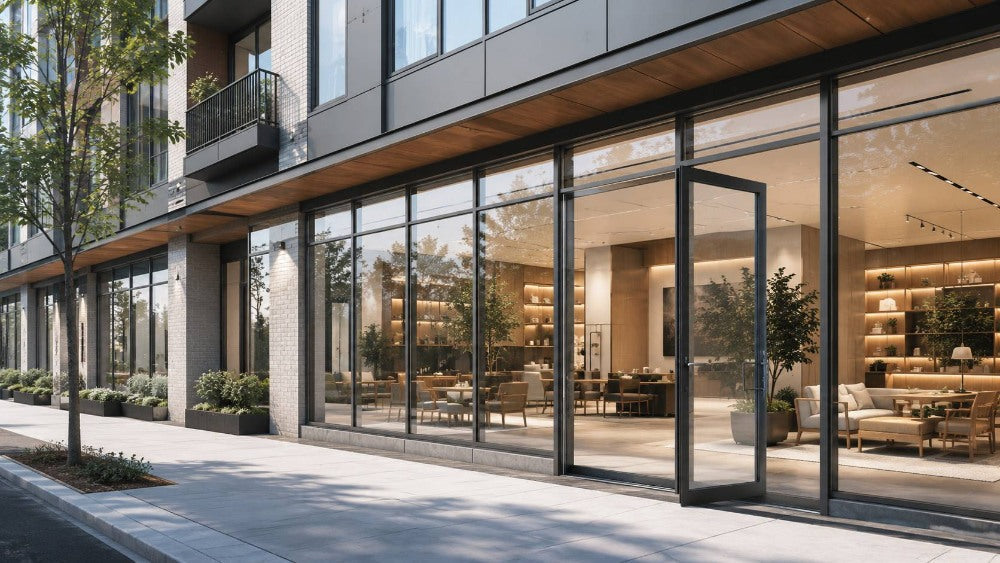
Large patio openings are most effective when they serve a clear lifestyle or project function. They are not only for luxury homes. They can also support compact homes, renovations, apartments with terraces, and hospitality spaces where light and openness matter.
Living Rooms, Kitchens, and Dining Areas
Sliding patio doors work well where families move often between interior and exterior zones. In a kitchen or dining room, the door can support outdoor meals and entertaining. In a living room, it can create a larger visual field and bring more daylight into the central space.
These applications are also where hardware quality matters. A door that opens every day needs smooth movement, reliable locking, and stable panel alignment.
Custom Homes and Renovation Projects
Custom homes often require specific colors, sizes, glass packages, and opening directions. Renovation projects add another layer: existing wall conditions, flooring levels, and installation access can restrict what is possible.
This is where professional coordination becomes useful. The best result usually comes from choosing the system after reviewing the building opening, local climate, desired view, energy goals, and daily use patterns.
How LUVINDOW Fits This Type of Project

For projects that need a large opening with a modern aluminum frame, Luvindow offers door and window systems for residential and commercial applications. The company section does not need to dominate the decision, but the product configuration is relevant when comparing options for large glass openings.
The Large Glass Lift and Sliding Doors use thermal break aluminum profiles with powder coating finishing. Available colors include black, white, silver, brown, and grey. The glass options include fully tempered safety double glazing, with configurations such as 6mm+12Ar+6mm and 5mm+12Ar+5mm, advanced Low-E coating, and argon gas filling. The product also uses South Korean brand hardware and accessories.
These features match the main concerns behind aluminum sliding doors: strength for larger panels, thermal performance, safety glass, and smoother use. For buyers comparing all doors, the key is to match the system to the opening size, climate, design style, and installation conditions rather than choosing by appearance alone.
Common Mistakes to Avoid
Most problems with large openings begin before the door is installed. A project can avoid many issues by checking the system early and giving the door supplier enough project information.
Choosing Glass Size Before Checking Performance
Large panels can look impressive, but bigger is not always better. Panel weight, wind exposure, frame depth, hardware capacity, and transport route all matter. If these points are ignored, the final door may be difficult to install or use.
Treating Energy Performance as a Single Feature
Energy efficient sliding doors are not created by one coating or one material. Performance comes from the full assembly: thermal break frame, insulated glass, Low-E coating, argon fill, weatherstripping, locking pressure, and correct installation. The door must be reviewed as a complete envelope component.
Leaving Installation Details Too Late
A sliding system needs a precise opening, a level base, correct anchoring, and well-planned drainage. Floor transitions should be coordinated before the finished surfaces are complete. This is especially important because panel movement and sealing rely on accurate alignment.
Final Thoughts
Large glass sliding doors can make a home brighter, more open, and more connected to the outdoor space. The best choice is not simply the largest glass panel available. It is the door system that balances views, comfort, structure, sealing, accessibility, and long-term operation.
For a modern project, start with the room layout and outdoor connection, then review frame material, glass specification, threshold needs, and installation conditions. If your project requires tailored sizes, glass options, or technical guidance, send the project details to our team and discuss a suitable sliding door configuration before construction decisions are locked in.
FAQ
Q:Are wide glass doors suitable for energy-conscious homes?
A:Yes, when the full system is specified correctly. Look for thermal break frames, insulated glass, Low-E coating, argon gas filling, quality seals, and proper installation.
Q:What is the main benefit of this opening system?
A:The main benefit of lift and slide doors is smoother movement for large panels and stronger sealing when closed. This makes them suitable for wide openings that need comfort and stable daily operation.
Q:Are aluminum sliding doors better for modern homes?
A:They are often a strong fit for modern homes because aluminum can support clean frame lines and larger glass areas. The best choice still depends on climate, size, glass type, and project requirements.







Leave a comment