


A storefront door carries more responsibility than a normal building entrance. It shapes first impressions, handles customer traffic, protects the business after hours, and affects entrance comfort. For retail shops, restaurants, offices, clinics, showrooms, and mixed-use buildings, these glass doors should be selected through a clear specification checklist, not only by appearance or price.
For commercial exterior doors with glass, the main question is practical: can the door support daily use without creating security, comfort, maintenance, or installation problems? A good specification should cover layout, glass, hardware, locking, code needs, and service before order confirmation.
Quick Storefront Door Specification Checklist
|
Layout |
Single door, double door, fixed glass plus door |
Affects access and facade balance |
|
Glass |
Tempered, insulated, Low-E, or sound-control glass |
Affects safety, comfort, and visibility |
|
Hardware |
Hinges, closer, handle, lock |
Affects daily operation |
|
Security |
Glass strength, frame alignment, locking plan |
Protects the storefront after hours |
|
Code |
Clear opening, threshold, local inspection needs |
Reduces approval risk |
This checklist keeps commercial entry doors tied to real site conditions. A clean rendering can still fail if the hinge, closer, lock, or glass is not suited to high-frequency use. It also helps buyers compare quotes more fairly. Two doors may look similar in drawings, but the glass package, hinge design, closer setup, and frame preparation may differ.
Match the Door Layout to Storefront Traffic
Single Doors for Smaller Entrances
A single glass door can work well for boutiques, salons, small offices, clinics, and compact retail units. The buyer still needs to check swing direction, handle position, approach space, and how customers enter from the sidewalk or corridor.
For smaller storefront doors, fixed glass around the active leaf can keep the entrance bright without adding unnecessary door weight. This layout also helps the facade stay clean and simple.
Double Doors for Wider Entrances
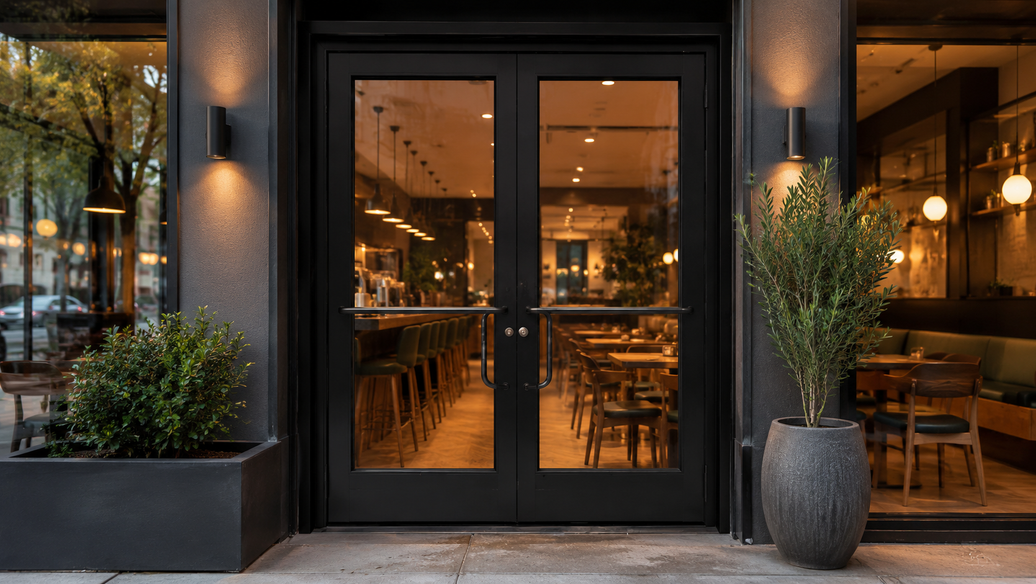
Double commercial entrance doors are often better for restaurants, showrooms, retail chains, and broad ground-floor units. They create a larger opening and can make the storefront look more balanced.
Confirm whether both leaves will be active daily or whether one leaf will usually stay locked. This affects the closer, lock, threshold, and future adjustment work.
Door and Fixed Glass as One System
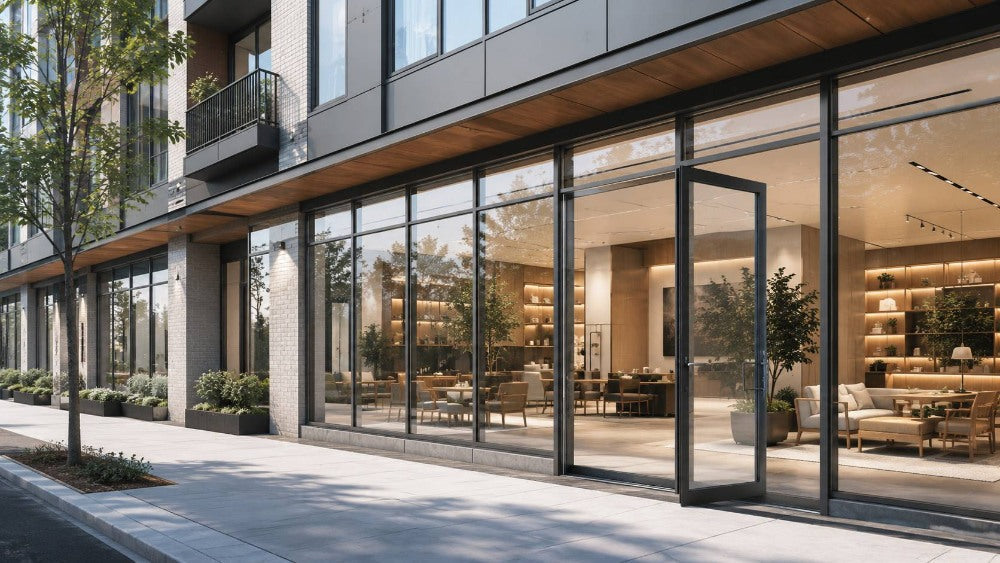
A storefront is often a complete glass system, not just one door. The entrance may connect with sidelites, transoms, window wall sections, or fixed glass panels. Planning them together helps keep the facade aligned, secure, and easier to install.
Luvindow works with window and door systems for residential and commercial projects, so the storefront entrance can be reviewed together with surrounding frame and glass details when the project needs a coordinated facade.
Security Specs to Check Before Choosing Commercial Exterior Doors With Glass
Glass Safety
Visibility matters in a storefront, but safety still comes first. Tempered glass is commonly used because it offers safer breakage behavior than ordinary glass. Depending on the project, buyers may also discuss insulated or laminated options with the project team.
Door glass should match exposure, business hours, neighborhood conditions, and local code. A street-facing shop and an interior mall unit may need different glass performance.
Locking and Frame Stability
A lock should not be selected alone. It has to work with the door leaf, frame, hinge, closer, and expected traffic. If the door shifts after repeated use, the lock may no longer meet the strike plate smoothly.
Stable alignment is part of security. Frame accuracy, hinge strength, and closer control all affect whether the door closes and locks correctly after months of use.
Glass Specifications for Visibility, Comfort, and Noise Control
Clear Visibility for Retail Display
Commercial glass entry doors are often chosen because they keep the business visible from outside. Clear glass helps shops, cafes, and showrooms display products, lighting, and interior activity. It also makes the entrance feel open.
The glass should still match the site. A high-sun facade or busy street may need a different specification from a quiet indoor retail corridor.
Energy and Acoustic Comfort
The entrance may sit near a reception desk, cash counter, waiting area, or dining seats. If the door faces sun, wind, or cold weather, energy-efficient glass and good sealing can help keep the space more comfortable.
Noise also matters. A storefront beside traffic, deliveries, or a crowded sidewalk may benefit from sound-dampening glass. Not every project needs the same acoustic level, but it should be checked early. For long business hours, better entrance comfort can support a more stable indoor environment.
Hardware Checklist for Daily Use
Hinge System
The hinge system carries repeated door movement. In a busy entrance, weak hinges may lead to rubbing, sagging, poor closing, or lock misalignment. This is why commercial entry doors need hardware review, not only glass and frame review.
The Durability Commercial Glass Doors For Storefront uses an integrated molding hidden hinge system. It suits storefront projects that need a cleaner appearance and stable operation under frequent opening and closing.
Door Closer and Return Control
A commercial door should close smoothly without slamming or staying partly open. The closer should match the leaf size, door weight, traffic level, and exterior exposure. Poor return control can affect comfort, safety, and energy use near the entrance.
Handle, Lock, and Finish Coordination
Handles and locks should match both function and appearance. A long pull handle may suit a showroom, while a simpler handle may fit a small office. Finish color should coordinate with the frame, signage, and storefront style.
Hardware details also affect customer experience. A balanced door feels easier to use and more professional.

Daily Use Factors Buyers Often Miss
Foot Traffic and Opening Frequency
The biggest difference between a commercial door and a residential door is repeated use. A busy storefront may open hundreds of times in one day. This affects hinges, closers, locks, seals, and the frame. A small studio, a coffee shop, and a chain retail store do not place the same demand on the entrance.
Customer, Staff, and Delivery Access
The same door may serve customers, employees, maintenance teams, and delivery staff. This affects width, swing direction, threshold, lock planning, and access control. For some stores, double doors may help during deliveries even if daily customer flow is moderate. Local accessibility and inspection needs should also be confirmed early.
Future Maintenance
Commercial doors need adjustment over time. Closers may need tuning. Locks, handles, seals, or hinges may need service. A practical specification should make future maintenance easier, not more difficult.
Hardware access and replacement parts should be practical enough to reduce business disruption later.
Where LUVINDOW Commercial Storefront Doors Fit Best
LUVINDOW commercial storefront doors fit retail shops, cafes, restaurants, showrooms, and mixed-use entrances where visibility, durability, security, and comfort need to work together. The product supports single and double opening configurations and can use double-layered tempered glass, door locks, energy-efficient glass, and sound-dampening glass options.
For broader entrance planning, buyers can also review related door systems to compare opening styles and project applications. The final choice should still be based on opening size, glass needs, hardware, exposure, and local code.
Final Pre-Order Checklist
Before ordering commercial storefront doors, prepare these details:
· Opening size and clear passage requirements
· Single or double door configuration
· Swing direction and daily traffic route
· Glass type for safety, comfort, visibility, and noise control
· Lock, handle, hinge, and closer preferences
· Frame color and finish requirements
· Exposure to sun, wind, rain, street noise, or heavy traffic
· Local code, inspection, and accessibility needs
· Drawings, facade plans, and project timeline
A complete inquiry makes quotes easier to compare and helps confirm whether the door system suits the project before production begins. Drawings, site photos, and basic performance requirements can also help reduce back-and-forth communication during early review.
Conclusion
A reliable storefront entrance starts with a clear checklist. Commercial glass entry doors need more than transparent glass and a clean frame. They need suitable hardware, safe glass, stable locking, comfortable insulation, and a layout that matches real business traffic.
For commercial exterior doors with glass, the right choice is the one that fits the site conditions, not just the one that looks strongest on paper. If your team is planning retail, restaurant, office, showroom, or mixed-use commercial entrance doors, send us your storefront door details for review. We can help check the configuration, glass options, hardware needs, and project requirements before quotation.
FAQ
Q:What should buyers check first when choosing a storefront glass door?
A:Start with opening size, traffic level, door layout, glass type, hardware, lock system, and local code needs. These items affect installation, safety, comfort, and daily operation.
Q:Are glass storefront doors suitable for high-traffic entrances?
A:Yes, if the door is specified correctly. High-traffic storefronts should use suitable safety glass, durable hinges, reliable closers, stable locks, and a frame system designed for repeated movement.
Q:When should a storefront use double commercial entry doors?
A:Double doors are useful for wider entrances, restaurants, showrooms, retail stores, and mixed-use buildings where customer flow, delivery access, or facade balance requires a larger opening.








Leave a comment