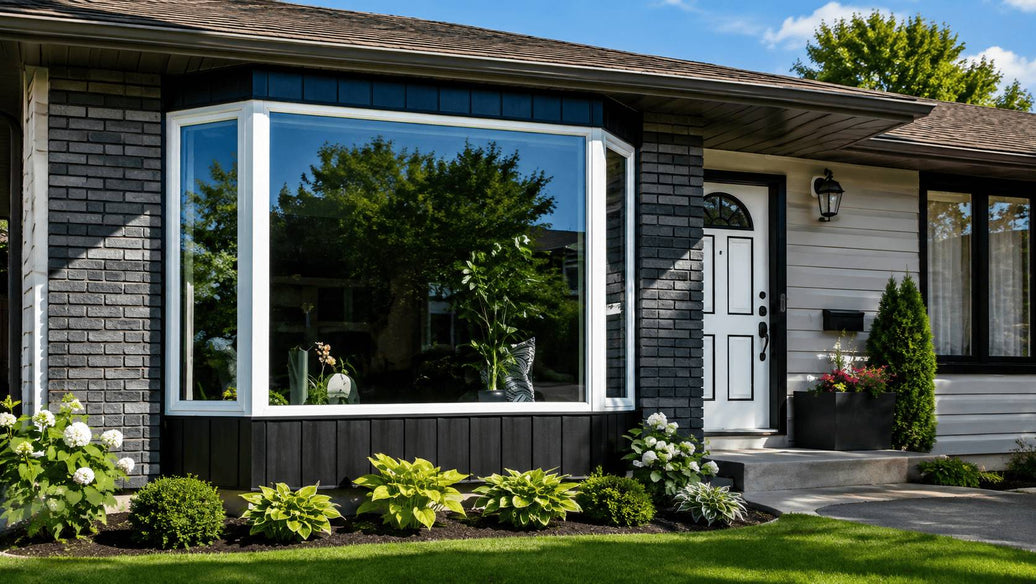
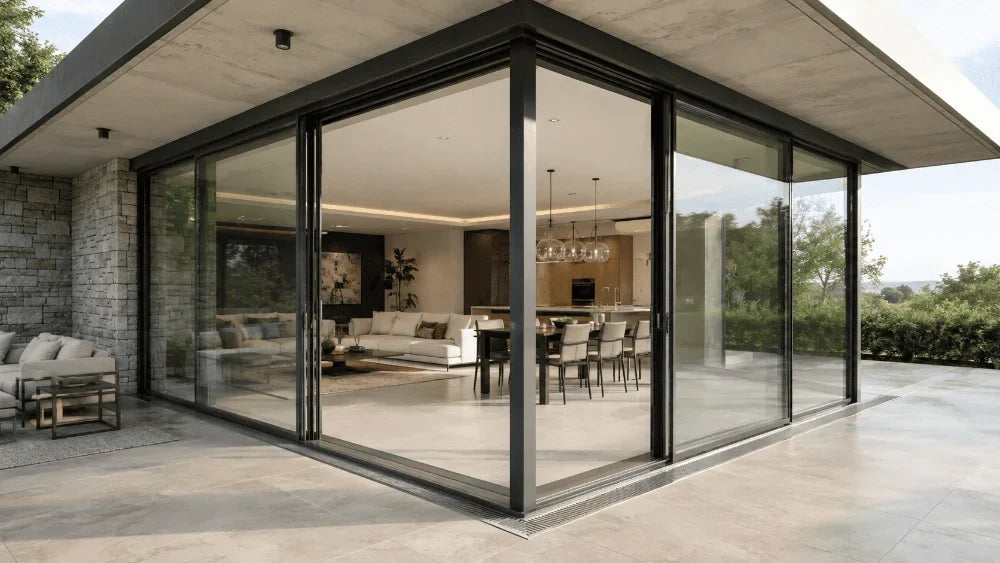
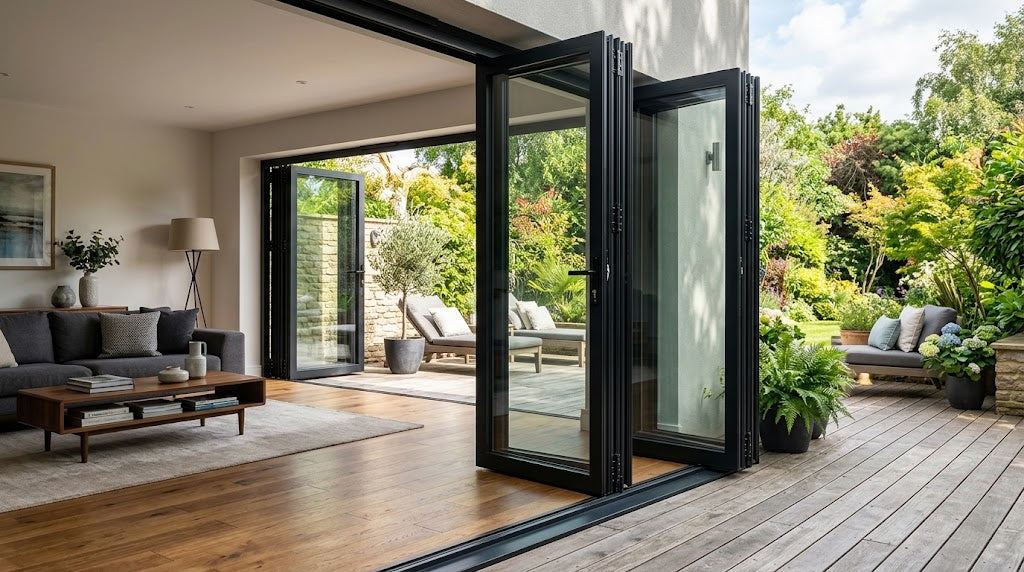
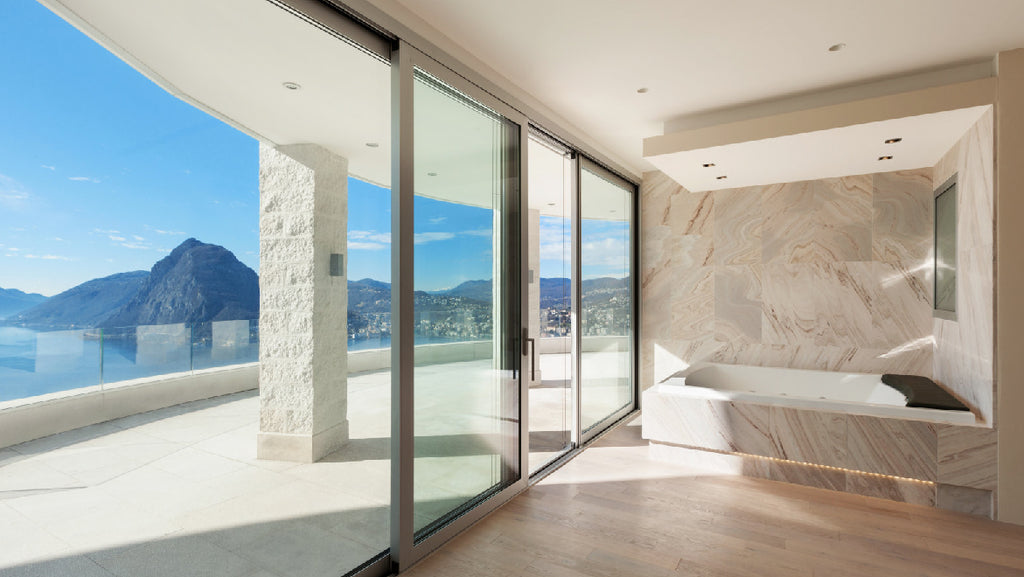
Laminated glass can be a strong starting point for reducing traffic and aircraft noise, but laminated glass alone does not make a complete soundproof window. The final result depends on pane thicknesses, interlayer, air spaces, frame, opening style, seals, hardware, installation, and the rest of the facade.
When specifying windows for traffic noise, asymmetric or laminated insulated glass often provides a more useful starting point than equal-thickness double glazing. Near airports, low-frequency sound deserves extra attention, so OITC data may be more useful than pane count alone.
Are Laminated Glass Windows the Same as Soundproof Windows?
Laminated glass uses two or more glass layers bonded with a plastic interlayer. If the glass breaks, fragments tend to remain attached to that layer. The construction can also add damping, which is why laminated glass is used for sound attenuation as well as safety applications.
A soundproof window is a performance concept applied to the full assembly. Glass is only one part. The sash, frame, gaskets, locks, mullions, and installation joint all create possible sound paths. In technical specifications, “acoustic window” or “noise-reducing window” is usually more accurate than a promise of complete soundproofing.
During procurement, confirm whether a quoted rating applies to the glass alone, the complete window, or a field-installed facade.
Which Glass Configuration Fits Traffic and Airport Noise?
The noise source, opening size, frame capacity, and thermal target all influence the glass choice.
Glass configuration Main acoustic direction Main limitation Standard double glazing Basic exterior-noise control Equal panes may respond similarly at some frequencies Asymmetric double glazing Broader response through different pane thicknesses Must match the actual project Laminated insulated glass Adds interlayer damping and an insulated cavity More weight and cost Triple glazing Can combine two cavities and varied panes More panes do not guarantee better results Secondary glazing May create a larger separated air space Requires interior room and careful sealing
Standard and Asymmetric Double Glazing
Standard double glazing can reduce exterior noise, but two panes of similar thickness do not always provide the broadest response. Changing one pane thickness helps the layers behave differently across the frequency range.
Asymmetric glazing is worth reviewing for windows for traffic noise, where tires, engines, motorcycles, and horns create a mixed sound profile. The tested unit should match the proposed panes, cavity, and window size.
Laminated Insulated Glass
Laminated insulated glass combines an interlayer with a sealed cavity. It can support acoustic and thermal goals while allowing the designer to vary the laminated lite, opposing pane, and cavity.
“Laminated” is not a complete purchase specification. Buyers should identify pane thicknesses, interlayer type and thickness, cavity width, coatings, heat treatment, and total unit weight. Different combinations can perform differently even when both are sold as laminated products.
Triple Glazing
Triple glazing can perform well when its panes and cavities are deliberately varied, but a conventional triple unit should not be assumed to outperform a designed laminated double-glazed unit. The added weight must remain within approved sash and hardware limits.
Why Is Airport Noise Harder to Control?
Road noise may include tire contact, engines, braking, motorcycles, sirens, and horns. The balance changes with speed, pavement, barriers, distance, and elevation.

Aircraft noise includes takeoff, approach, ground movement, and engine activity. These events can contain strong low-frequency energy that passes through lightweight building elements more readily. Windows for airport noise should therefore be considered as part of the entire facade, including walls, roofs, vents, doors, and mechanical penetrations.
A high-performing window cannot correct a weak wall or unsealed opening. PTAC interfaces, louvers, vents, electrical penetrations, and corridor doors may all affect the room result. Project teams should provide the location, dominant source, operating hours, and any consultant criteria before requesting a glass schedule.
Should Buyers Compare STC or OITC?
STC and OITC are single-number ratings, but they address different acoustic conditions.
STC for General Sound Insulation
ASTM E413 provides the method used to calculate STC from laboratory transmission-loss data. It is widely used to compare assemblies under controlled conditions. Field performance may be lower because of construction errors and flanking paths.
STC is useful, but it should not be the only number used for a facade exposed to aircraft, freeway, or rail noise. Two units with similar ratings can still behave differently in individual frequency bands.
OITC for Transportation Sound
ASTM E1332 bases OITC on a reference spectrum derived from transportation sources, including aircraft takeoff, road traffic, and diesel locomotives. Its low-frequency emphasis makes it especially relevant when selecting windows for airport noise or heavy transport corridors.
Buyers should request the test standard, specimen dimensions, glass build-up, frame type, operability, and laboratory details. A fixed-unit rating should not be assigned automatically to a larger operable window.
Which Window Style Is Better for Noise Reduction?
Opening type affects how the sash seals against the frame. It also changes hardware load, ventilation, and maintenance.
Fixed Windows
A fixed window has no operable joint between sash and frame, so continuous sealing is easier. It is often a practical starting point for bedrooms, hotel rooms, or facade sections that do not require natural ventilation.
Its limitation is that it does not open. Egress, smoke ventilation, cleaning, or fresh-air requirements may call for operable units elsewhere. A facade can combine larger fixed panes with fewer carefully placed opening sashes.
Casement and Tilt-Turn Windows
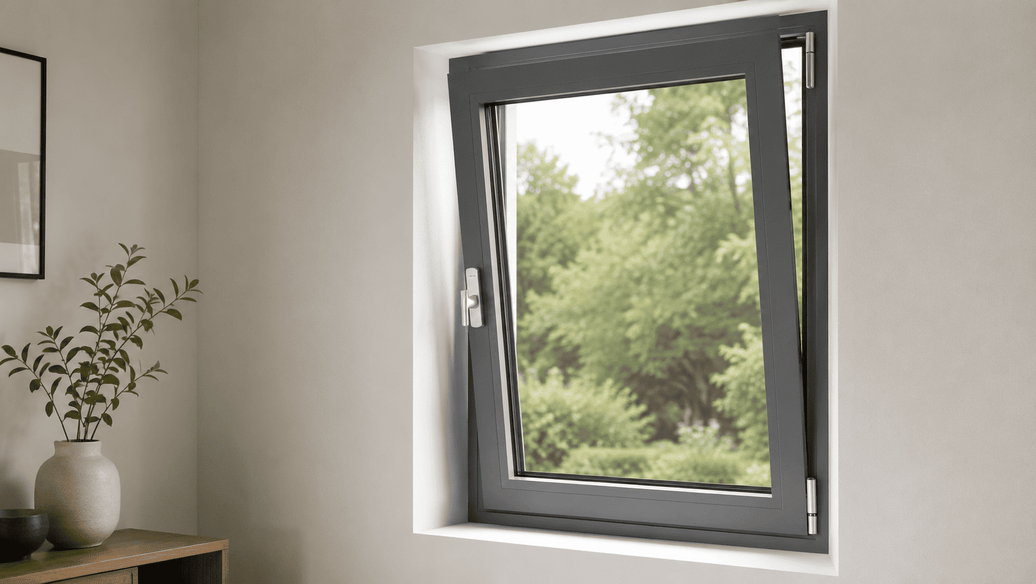
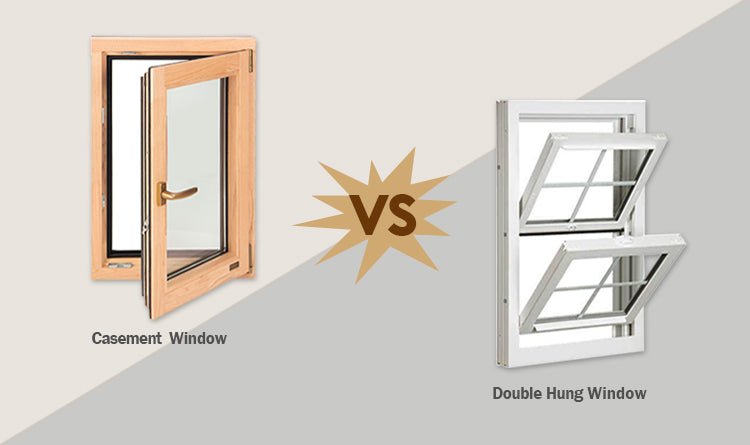
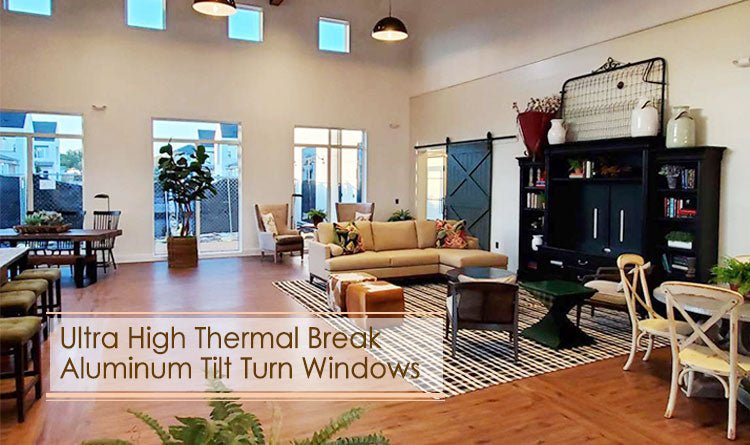
Casement and tilt-turn windows close by pressing the sash against perimeter gaskets. Multi-point locking can distribute pressure around the opening, supporting air control and acoustic performance when correctly adjusted.
These styles suit rooms that need ventilation and noise reduction, provided the sash dimensions and hardware suit the heavier glass.
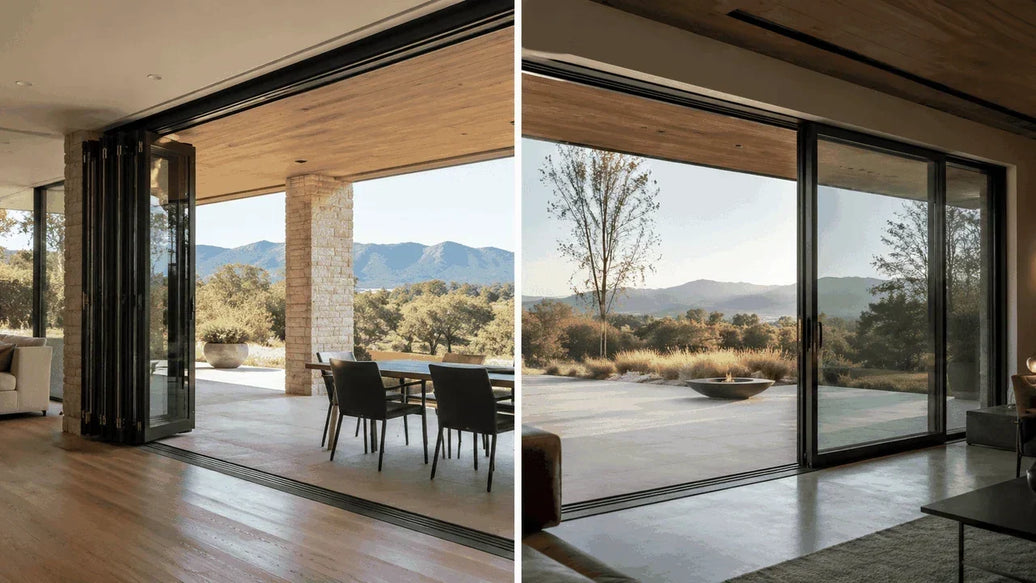
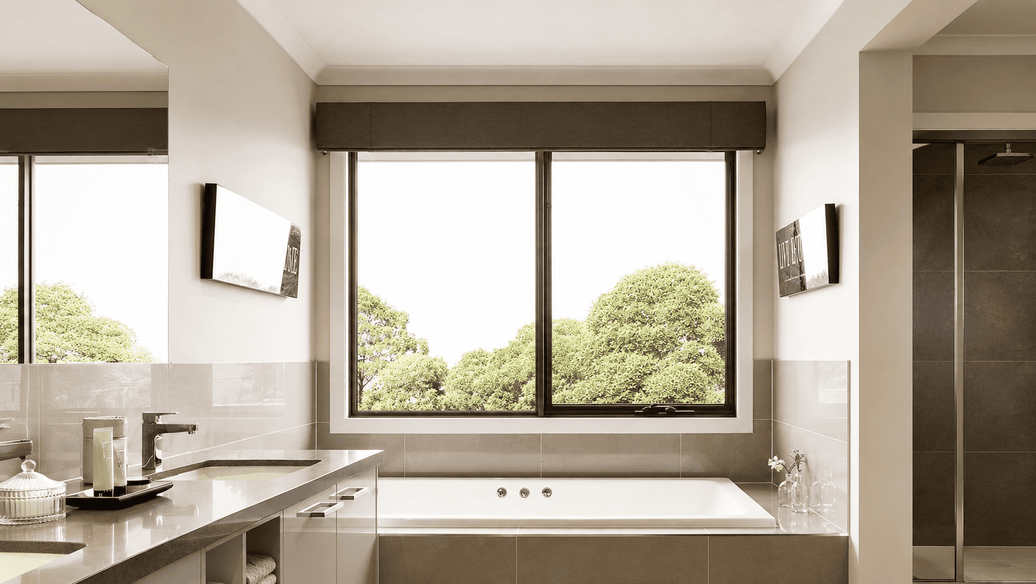
Sliding Windows
Sliding windows need movement clearance along their tracks. Their performance depends on interlocks, brushes or gaskets, drainage, frame stiffness, and fabrication tolerances. Buyers should rely on tested whole-window data rather than a glass-only rating.
Why Do Frames, Seals, and Installation Matter?
Sound follows gaps. A small air leak around a sash or frame can limit the value of a sophisticated glass package. Acoustic procurement should therefore treat the window as one system.
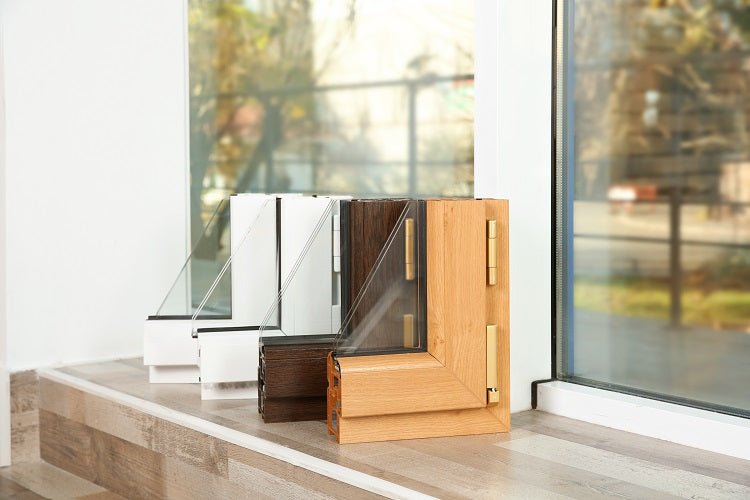
Frame depth and stiffness affect how well the unit carries heavy glass without twisting. Thermal breaks, wood sections, aluminum cladding, and reinforced mullions may support the assembly, but the material name alone does not establish an acoustic rating.
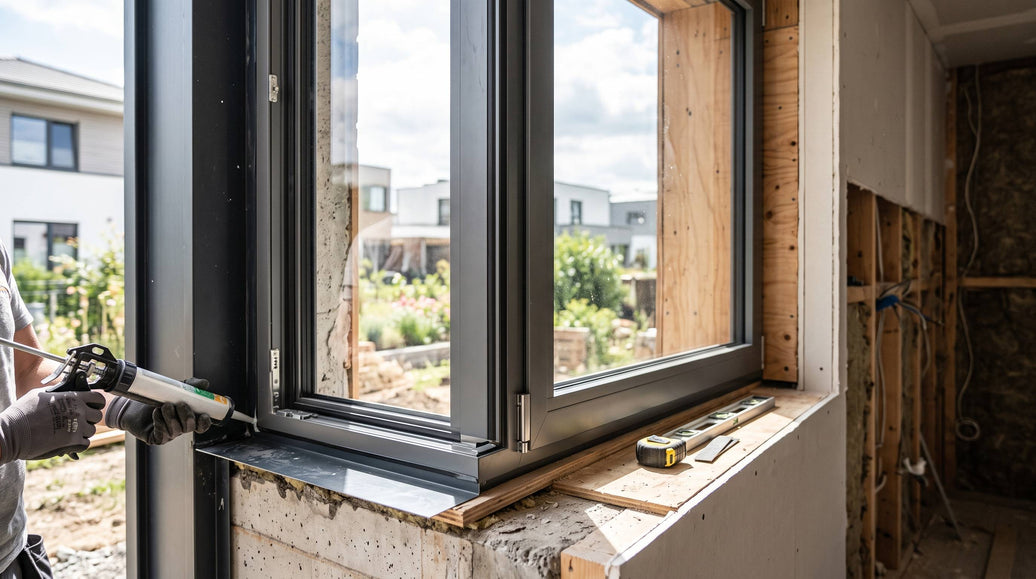
Gaskets should remain continuous at corners and meeting points. Multi-point hardware should apply even pressure without making operation impractical. At the wall, backer rod, sealant, insulation, flashing, and interior finishes must close the installation joint without blocking drainage.
In large openings, mullions, anchors, slab edges, and adjacent facade elements can create paths around the tested glass. Site workmanship affects how closely the installation approaches laboratory performance.
How Can Luvindow Support Different Acoustic Projects?
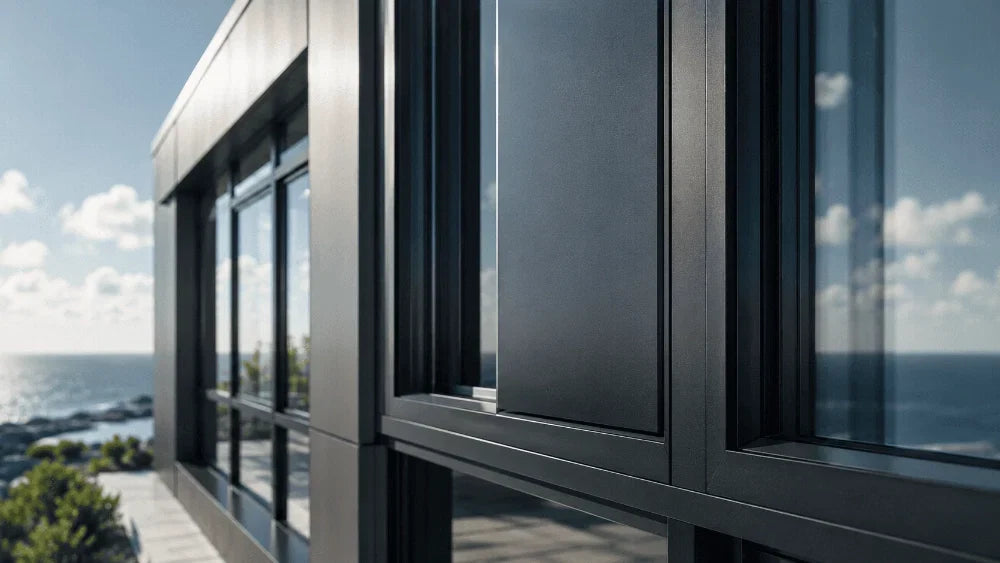
Once the target rating and site conditions are defined, Luvindow can coordinate fixed, casement, tilt-turn, aluminum-clad wood, PTAC, and window-wall configurations with double, laminated, or triple glazing options. This is useful when one development needs quiet bedrooms, operable living-room windows, fixed hotel glazing, and larger facade sections within one schedule.
For urban apartments and road-facing homes, asymmetric or laminated insulated glass in a compression-sealed frame may be a practical starting point. Larger fixed panes can reduce the number of operable joints.
For airport-adjacent projects, the process should begin with an acoustic target rather than a standard glass package. The design team can then review OITC requirements, pane combinations, sash weight, fixed-to-operable ratios, and installation details. No configuration should be presented as suitable for a flight path without matching test evidence.
Hotels and mixed-use buildings require wider coordination because sound may bypass the main glass through louvers, vents, gaps, or facade junctions. Luvindow’s project gallery includes residential, hotel, office, and large-glass applications for layout reference.
The window collection can also help shortlist frame styles before shop drawings are prepared. Acoustic ratings, glass build-ups, dimensions, and hardware limits should still be confirmed for the exact unit being ordered.
What Should Buyers Request Before Ordering Acoustic Windows?
A useful quotation request should include more than a rough opening and the phrase “soundproof glass.” Provide:
1. The main noise source and its distance from the building
2. Any site survey, indoor target, STC, or OITC requirement
3. Window dimensions and the number of fixed and operable units
4. Required opening style, ventilation, egress, and cleaning access
5. Pane, interlayer, cavity, coating, and heat-treatment details
6. The whole-window report and tested specimen size
7. Frame, gasket, mullion, and hardware information
8. Wall construction and perimeter installation details
9. PTAC, louver, vent, door, and mechanical penetrations
10. Local energy, safety-glazing, impact, and building-code requirements
Confirm whether each report applies to glass only or the complete assembly. For replacement work, photographs and wall details can reveal weak installation joints.
A related case, Luvindow’s Window Walls and Custom Oversized Glass, shows how laminated glazing and large facade systems can be considered together in a noisy urban setting.
Select the Tested Assembly, Not the Loudest Claim
Laminated glass is valuable, but it is one part of a complete acoustic design. For road noise, asymmetric or laminated insulated glazing may offer a better starting point than standard equal-thickness double glazing. For aircraft noise, low-frequency performance, OITC data, facade penetrations, and room-level targets need greater attention.
The best soundproof windows are not selected by pane count alone. They combine tested glass, a suitable frame and opening type, continuous seals, compatible hardware, and a carefully detailed installation.
When the site noise source, opening schedule, facade drawings, and target ratings are available, share the project requirements for an acoustic window review. The discussion can then focus on evidence, dimensions, and practical configuration rather than a generic soundproofing claim.
FAQ
Q: Are laminated glass windows good for traffic noise?
A: They can be a strong option because the interlayer adds damping, especially when combined with an insulated cavity and panes of different thicknesses. The final choice should use a tested whole-window configuration that matches the proposed size and opening type.
Q: What type of window is best near an airport?
A: Fixed windows or compression-sealed casement and tilt-turn units are common starting points. The project should prioritize OITC and low-frequency data, then check walls, vents, doors, and mechanical openings so noise does not bypass the window.
Q: Is triple glazing better than laminated glass for sound?
A: Not automatically. A carefully designed laminated double-glazed unit may outperform a basic triple unit at relevant frequencies. Compare the exact glass build-up, whole-window results, sash weight, frame capacity, and project noise spectrum before choosing.